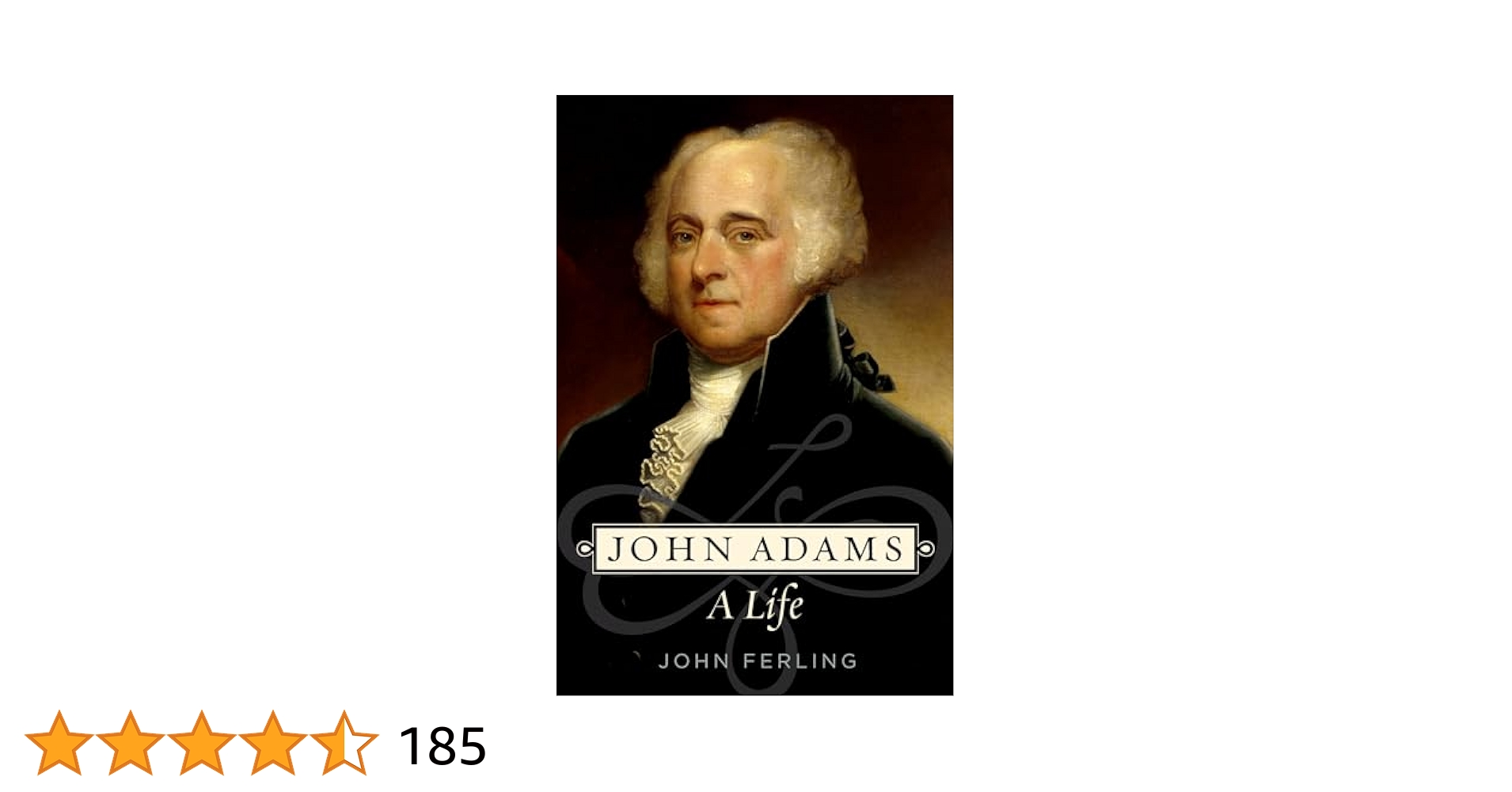
johnbowe.info – John Adams: A Life by John Ferling is a comprehensive and engaging biography of one of America’s Founding Fathers, John Adams. Through meticulous research and analysis, Ferling paints a portrait of a man whose contributions to the American Revolution, the founding of the United States, and the shaping of its early government were integral to its success. This biography delves deep into Adams’ complex personality, his relationships with other prominent figures of the time, and his impact on the nation’s evolution.
Overview of the Biography
John Ferling’s John Adams: A Life is a thorough exploration of the personal and political life of John Adams, from his early years in Massachusetts to his time as a Founding Father, his presidency, and his later life. Ferling, a noted historian, weaves together Adams’ political philosophy, personal conflicts, and interactions with historical figures to create a dynamic narrative that brings to life the man behind the monumental political achievements.
Ferling’s biography is not just about Adams’ role in American history, but also about his evolution as a man. It looks at the contradictions in Adams’ character, such as his idealism and pragmatism, his ambition and humility, and his unwavering commitment to independence alongside his occasional distrust of democracy. These traits shaped his decisions and his legacy.
Early Life and Education
Childhood and Family Background
John Adams was born on October 30, 1735, in Braintree, Massachusetts (now Quincy). He was the son of John Adams Sr., a farmer and shoemaker, and Susanna Boylston Adams. Growing up in a relatively modest family, Adams was exposed to the value of hard work and education early on. His father was a member of the local church, and Adams’ upbringing was shaped by Puritan values, including discipline, moral rectitude, and a belief in education.
Adams attended the local grammar school and later went to Harvard College, where he graduated in 1755. At Harvard, he developed a passion for the law and began his study of political philosophy. He came into contact with the great ideas of the Enlightenment, including the works of John Locke and Montesquieu, which would later influence his thinking during the Revolutionary War and his time in office.
Legal Career
After completing his studies at Harvard, Adams became a lawyer in Boston. During this time, he began to take an active interest in the political issues facing the American colonies. In 1765, Adams wrote his first important work, A Dissertation on the Canon and Feudal Law, which criticized British rule and supported colonial self-governance. Although his career as a lawyer was relatively successful, it was his increasing involvement in politics that would define his life.
Adams’ Role in the American Revolution
A Strong Advocate for Independence
Adams was a staunch advocate for independence from Britain, and his views on the matter were often radical for his time. As tensions with Britain escalated in the late 1760s and early 1770s, Adams found himself at the forefront of the colonial resistance. He was one of the key figures in the Continental Congress, where he argued passionately for the colonies’ right to self-determination.
Adams’ political acumen and persuasive speaking skills earned him a reputation as a leader in the movement for independence. His most famous role during the Revolution came when he was a member of the committee that drafted the Declaration of Independence. Though Thomas Jefferson is often credited with writing the document, it was Adams’ tireless lobbying that ensured its passage.
Diplomacy and the War Effort
During the Revolutionary War, Adams was sent to Europe as a diplomat to secure crucial alliances for the fledgling United States. His most significant achievement was negotiating the Treaty of Paris in 1783, which ended the war and recognized American independence. Ferling details Adams’ time in Europe, highlighting his diplomatic skill, his occasional frustration with his counterparts, and his unyielding belief in America’s potential.
The Presidency of John Adams
The Challenges of the Presidency
Adams was elected as the second president of the United States in 1796. His presidency was marked by domestic challenges, including the growing political divisions between the Federalists and the Democratic-Republicans, as well as international tensions with France. Adams had to navigate the difficulties of maintaining American neutrality during the French Revolution and the ensuing wars between France and Britain.
Perhaps the most controversial aspect of Adams’ presidency was his decision to avoid war with France despite pressures from his fellow Federalists. The so-called “XYZ Affair” and the subsequent Quasi-War with France created a volatile political atmosphere, but Adams’ commitment to peace ultimately led to the signing of a treaty with France in 1800, which helped avoid full-scale war.
Adams’ Legacy as President
Adams’ presidency is often regarded as a period of both triumph and turmoil. He strengthened the executive branch of the government but also faced significant opposition from Thomas Jefferson and the Democratic-Republicans. Adams was fiercely committed to the principles of republicanism, and his administration struggled with the contradictions between maintaining a strong central government and preserving individual liberties.
Ferling highlights the complexity of Adams’ presidency, noting that while he was often criticized for his partisanship and occasional authoritarian tendencies, he was also a staunch defender of the nation’s independence and sovereignty. His presidency laid important groundwork for the future development of the United States, even if his political career ended in defeat when he lost the election of 1800 to Jefferson.
Post-Presidency and Death
Reflection on His Life
After leaving office, Adams retired to his farm in Quincy, Massachusetts, where he spent his later years in relative obscurity. His correspondence with Thomas Jefferson, which resumed in the early 1810s, is one of the most fascinating aspects of his post-presidential life. Adams and Jefferson, once political rivals, exchanged letters that reflected on their shared role in the American Revolution and the founding of the nation.
Adams died on July 4, 1826, the same day as Thomas Jefferson, marking the 50th anniversary of the Declaration of Independence. His death on this significant date is a poignant reminder of his deep connection to the birth of the United States.
The Legacy of John Adams
Ferling concludes his biography by reflecting on the lasting impact of John Adams. Though often overshadowed by figures like George Washington and Thomas Jefferson, Adams’ contributions were undeniably crucial to the success of the American Revolution and the creation of the United States. His leadership, his commitment to independence, and his tireless efforts on behalf of his country continue to resonate today.
Conclusion
John Adams: A Life by John Ferling offers an insightful and detailed examination of the life of one of America’s most important Founding Fathers. By exploring Adams’ personal struggles, political philosophy, and relationships with other key figures, Ferling provides readers with a nuanced understanding of the man behind the myth. This biography is a must-read for anyone interested in the history of the American Revolution, the early years of the United States, or the complex personalities that shaped the nation.