The Life and Legacy of William Henry Harrison

johnbowe.info – William Henry Harrison, the 9th President of the United States, is often remembered for his brief presidency, which lasted only 31 days, but his legacy stretches far beyond that short time in office. As a prominent military leader and political figure in early American history, Harrison played a significant role in shaping the nation. This article will explore his early life, military career, political achievements, presidency, and the enduring impact he left on the country.

Early Life and Education

William Henry Harrison was born on February 9, 1773, in Berkeley Plantation, Virginia, into a prominent family. His father, Benjamin Harrison V, was a signer of the Declaration of Independence, and his grandfather, Joseph Ball, was a successful Virginia planter. This well-connected family provided Harrison with opportunities for a good education, although his formal schooling was limited.

At the age of 14, Harrison enrolled at the College of New Jersey (now Princeton University) but soon left to study medicine under a local doctor. His brief time at college, combined with his later study of medicine, helped to shape his intellect and his early views on leadership.

Military Career and the Battle of Tippecanoe

Harrison’s military career began at the age of 18 when he was commissioned as an ensign in the Army during the Northwest Indian War. His early service, marked by his involvement in various conflicts with Native American tribes, laid the groundwork for his rise to national prominence.

One of the defining moments of his career occurred during the War of 1812, when Harrison commanded American forces in the Northwest Territory. His most significant military victory came at the Battle of Tippecanoe in 1811, where he led U.S. forces against the Shawnee chief Tecumseh and his brother, Tenskwatawa (the Prophet). The victory at Tippecanoe earned Harrison national fame, with his rallying cry, “Tippecanoe and Tyler Too,” becoming a slogan during his presidential campaign years later.

Political Rise and the Road to the Presidency

After his military service, Harrison turned to politics. He served as the Governor of the Indiana Territory from 1800 to 1812, where he worked to facilitate American expansion into the region and manage relations with Native American tribes. His political acumen led him to a successful career, and in 1824, Harrison was elected to the U.S. Senate as a member of the Whig Party.

Harrison’s reputation as a military hero and political leader helped him secure the nomination as the Whig Party’s candidate for president in 1836. However, he was defeated by Martin Van Buren. Undeterred, Harrison ran again in 1840 and won a landslide victory against incumbent President Van Buren.

Presidency: A Short But Impactful Term

Harrison’s inauguration as the 9th President of the United States on March 4, 1841, was a historic event. At the age of 68, he became the oldest person to assume the presidency at that time. His inaugural address was one of the longest in history, lasting nearly two hours, and he caught a cold shortly afterward, which worsened into pneumonia. Harrison died on April 4, 1841, just 31 days into his presidency, making his tenure the shortest in American history.

Although his presidency was brief, Harrison’s election marked a significant shift in American politics. His victory in 1840, which is often credited to his ability to connect with the common man, was a precursor to the rise of populist politics in the United States. His victory also marked the first time the Whig Party gained control of the White House.

The Impact of Harrison’s Presidency

While Harrison’s presidency was short-lived, the impact of his election was far-reaching. The 1840 election campaign was the first to feature modern campaign techniques such as mass rallies, the use of slogans, and a focus on the personal character of candidates. Harrison’s image as a rugged military hero resonated with the American public, and his campaign slogan, “Tippecanoe and Tyler Too,” became one of the most iconic in American political history.

His death also had significant constitutional implications. Harrison’s sudden passing raised questions about presidential succession, and it was during his presidency that the 25th Amendment to the Constitution was later proposed and ratified, which clarified the procedures for presidential succession and the appointment of a new vice president.

Legacy and Influence on American Politics

William Henry Harrison’s legacy continues to be felt in American politics, despite his short presidency. His emphasis on populism and his ability to connect with the American people paved the way for future presidents who sought to build strong connections with their constituents. Harrison’s legacy as a military leader and his role in the expansion of the United States into the western territories helped shape the nation’s development during the early 19th century.

His death also led to a greater understanding of the importance of clear constitutional procedures in times of crisis. His passing underscored the need for clarity in the event of a president’s death or incapacity, which ultimately led to the establishment of clearer guidelines for presidential succession.

Conclusion

The life of William Henry Harrison, though marked by a presidency of only 31 days, was one of considerable achievement. From his early military successes to his political rise and eventual presidency, Harrison left an indelible mark on the history of the United States. His legacy as a military hero and a symbol of American expansion continues to resonate in the country’s collective memory, and his brief presidency served as a stepping stone for the nation’s continued growth and development.
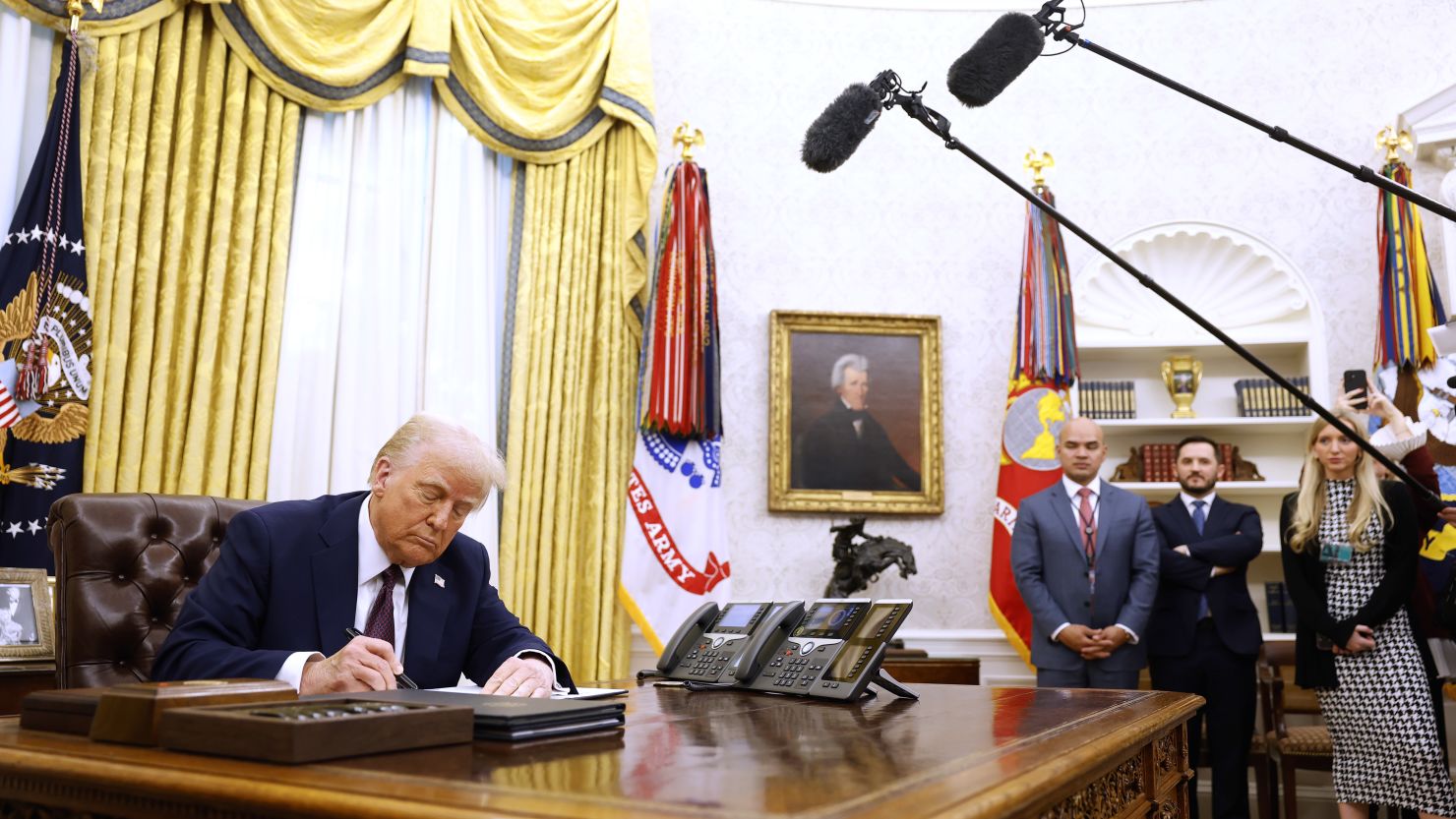
Trump Signs Executive Orders Reshaping Military Policies

johnbowe.info – In a move that has caught the attention of both military experts and the public, former President Donald Trump signed a series of executive orders aimed at reshaping military policies during his administration. These orders sought to implement changes in various areas, ranging from the recruitment and training of military personnel to the reorganization of defense spending and strategies. The decisions made through these executive orders continue to have a significant impact on the U.S. military even after Trump’s tenure in office.

Key Areas Affected by Trump’s Executive Orders

Trump’s executive orders were designed to address a number of critical issues facing the military, including military readiness, national defense strategy, and the overall modernization of military forces. Below are some of the key areas where these executive orders brought about significant changes:

1. National Defense Strategy and Budget

One of the most notable areas where Trump’s orders had an impact was on the U.S. national defense strategy and budget allocation. The former president prioritized strengthening the military by allocating substantial funding for defense programs.

The executive orders aimed to enhance military capabilities in areas such as space defense, cyber warfare, and missile defense. These measures were designed to prepare the military for emerging threats posed by China, Russia, and other global adversaries. Additionally, there was an emphasis on modernizing the existing military infrastructure to ensure that the U.S. would remain a dominant force in the global defense arena.

2. Military Personnel and Recruitment

Trump’s military policies also focused on military recruitment and personnel. He signed orders to expand recruitment efforts, making it easier for military branches to meet their recruitment goals. This was done by streamlining the process and improving incentives for service members. In particular, the military was given more leeway to recruit individuals with prior experience and those who might not have met traditional military qualifications but demonstrated valuable skills.

The administration also made it easier for transgender individuals to serve openly in the military, a reversal of a policy established under the Obama administration that prohibited transgender service members from serving. Trump’s orders helped to clarify the military’s stance on inclusion, ensuring that service members could serve without discrimination based on gender identity.

3. Military Readiness and Training

Readiness and training are central to the strength of any military. Through a series of executive orders, Trump placed emphasis on improving military training programs to ensure that U.S. forces were prepared for combat in diverse environments. These efforts also included enhancing joint military exercises with allied nations and increasing the integration of modern technologies into training regimens.

Additionally, Trump advocated for increasing the size of the U.S. military, boosting the number of active-duty personnel and increasing the number of reserve and National Guard forces. This was part of his broader push to ensure that the U.S. military had the manpower needed to deal with multiple threats globally.

4. Strengthening the U.S. Space Force

In a move that drew both praise and criticism, Trump issued an executive order to establish the U.S. Space Force as an independent branch of the U.S. military. The U.S. Space Force was designed to enhance America’s dominance in space, ensuring the nation could defend its satellites and space assets from potential threats posed by adversaries.

The formation of the Space Force marked the first time in over 70 years that a new branch had been created within the U.S. military. The move was aimed at addressing growing concerns about space warfare and the militarization of space by other nations.

Trump’s Legacy and Military Policy

Trump’s executive orders on military matters represent a significant shift in U.S. defense policy. While many of these orders have been criticized by some for being too aggressive or too focused on enhancing military power, others have praised the former president for ensuring that the U.S. remains a powerful and competitive force on the world stage.

Many of the changes Trump initiated continue to affect military policy and operations today, particularly in areas like cyber defense, military readiness, and space defense. The Space Force, in particular, remains a highly visible aspect of Trump’s military legacy.

Continued Impact on U.S. Defense Strategy

The reshaping of military policies through executive orders set in motion several initiatives that will have a lasting impact on how the U.S. military functions. Some of these policies have been further expanded or refined by subsequent administrations. Moreover, the focus on space and cyber warfare is likely to become even more pronounced as new technological threats emerge.

Trump’s commitment to rebuilding the military and increasing its capabilities in the face of rising global challenges has redefined how the U.S. approaches defense. Despite the controversy that surrounded some of his military-related decisions, the broader strategic shifts set in motion during his presidency are likely to influence U.S. defense policy for years to come.

Criticisms and Controversies

While Trump’s military executive orders received support from many of his allies and some segments of the military, they also faced significant criticism. Some detractors argued that his focus on military spending and expansion took away attention from diplomatic and peace-building efforts. There were also concerns about the lack of clear oversight and accountability in the decision-making process surrounding these changes.

One of the most controversial aspects of his policies was his stance on foreign military interventions. Critics contended that Trump’s “America First” approach could lead to the U.S. pulling back from international commitments, potentially leaving allies vulnerable to adversarial nations. These concerns were particularly evident in his handling of the U.S. withdrawal from Afghanistan and his questioning of NATO’s effectiveness.

Conclusion

Trump’s series of executive orders reshaping military policies marked a significant chapter in U.S. defense history. These orders reflected his administration’s commitment to enhancing military power, ensuring U.S. dominance on the global stage, and modernizing the military to deal with new-age threats. While opinions on these changes remain divided, there’s no doubt that Trump’s military executive orders reshaped the future of U.S. defense and set the stage for new challenges and opportunities in the years ahead.