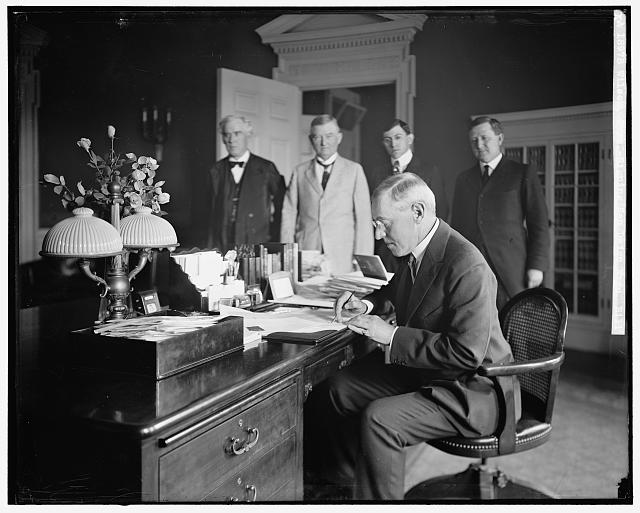
Woodrow Wilson: Progressive Reformer or Conservative Leader?

johnbowe.info – Woodrow Wilson, the 28th president of the United States, is often celebrated as one of the most transformative figures in American history. His two terms in office, from 1913 to 1921, spanned a period of dramatic social, political, and economic change in the United States and the world. Wilson is generally remembered as a progressive president who sought to reshape American society with an array of reform policies and a vision for a new world order. Yet, his legacy is far from straightforward. Critics argue that Wilson’s domestic reforms often had limitations and that his leadership in foreign affairs revealed a more conservative, cautious side that conflicted with his idealistic domestic agenda.

This article seeks to explore the dual nature of Wilson’s political identity, weighing whether he should be considered a progressive reformer or a conservative leader. It examines his domestic policies, his views on governance, and his actions both in domestic politics and foreign diplomacy to uncover the complexities of his political philosophy and leadership style.

Early Political Career: Foundations of Wilson’s Ideals

Wilson’s Intellectual and Academic Background

Woodrow Wilson’s journey to the presidency was unique in that he was one of the few U.S. presidents who came from an academic background. A political scientist and historian, Wilson had spent much of his early career teaching at Princeton University and writing about government and political theory. This intellectual foundation would later shape his understanding of governance and inform his approach to both domestic and foreign policy.

As a scholar, Wilson was deeply influenced by the ideas of progressivism, which emerged in the late 19th and early 20th centuries as a response to the growing industrialization of the U.S. and the social inequalities that accompanied it. Progressivism called for government intervention to address economic inequalities, protect workers’ rights, and regulate the excesses of big business. Wilson’s early writings, particularly his work on The State: Elements of Historical and Practical Politics, reflected his interest in the evolving role of the state and its potential to act in the service of the public good.

Political Transition: From Governor of New Jersey to the White House

Wilson’s political career began in earnest when he became governor of New Jersey in 1911. As governor, Wilson quickly became known for his progressive reforms. His platform focused on breaking up monopolistic corporate power, regulating industries, and improving conditions for workers. In many ways, Wilson’s tenure as governor laid the groundwork for his presidential campaign in 1912, in which he presented himself as the candidate who would push for progressive reforms and challenge the entrenched corporate interests of the country.

Wilson’s success as governor and his progressive agenda resonated with voters, and in 1912, he won the presidency as the Democratic candidate. He defeated incumbent William Howard Taft, a Republican, and former president Theodore Roosevelt, who ran on the Progressive Party ticket. Wilson’s victory was seen as a triumph of the progressive movement, and his presidency was eagerly anticipated as a moment for profound reform.

Wilson’s Domestic Policies: A Progressive Agenda with Limits

The New Freedom: Wilson’s Vision for Economic Reform

Upon taking office in 1913, Wilson embarked on a legislative agenda that he called “The New Freedom”. This program was designed to tackle the concentration of power in both big business and government, with the ultimate goal of promoting individual liberty and opportunity. The New Freedom aimed to break up monopolies, reduce tariffs, and improve the functioning of government through regulatory measures.

Key aspects of the New Freedom included:

  1. Tariff Reform: One of Wilson’s first acts as president was to reduce the tariff rates through the Underwood Tariff Act of 1913. The reduced tariffs were designed to lower consumer prices and promote free trade by reducing protectionist policies that benefitted large corporations. This act was a significant achievement for Wilson, as it fulfilled his campaign promise to make the economy more open and competitive.

  2. Banking Reform: Wilson’s Federal Reserve Act of 1913 established the Federal Reserve System, a central banking system designed to regulate the money supply, provide more control over credit, and stabilize the economy. The Federal Reserve Act remains one of Wilson’s most lasting contributions to American economic policy and was designed to mitigate financial panics and prevent the undue influence of private banks on the economy.

  3. Antitrust Legislation: Wilson supported and signed the Clayton Antitrust Act of 1914, which strengthened antitrust laws aimed at curbing monopolies and anti-competitive business practices. The act extended the powers of the Sherman Antitrust Act, making it more difficult for corporations to engage in monopolistic practices that harmed consumers and small businesses.

While these reforms were significant victories for the progressive movement, Wilson’s approach also faced limitations. For instance, his efforts at banking and antitrust reform were often tempered by his desire to maintain a balance between competition and economic stability. Wilson was reluctant to fully embrace certain radical reforms, such as a national labor program, fearing that government intervention could stifle economic growth. Thus, while he achieved considerable success in curbing corporate power, some of his policies did not go as far as the more radical progressives had hoped.

Social Reforms: Mixed Successes and Failures

Wilson’s domestic social reforms were more complicated and, in many cases, less successful than his economic reforms. Labor rights, civil rights, and women’s suffrage were major issues during Wilson’s presidency, but his record on these matters was mixed.

  1. Labor Rights: Wilson did take steps to improve labor conditions, such as signing the Adamson Act of 1916, which established an eight-hour workday for railroad workers. However, his efforts to push for more comprehensive labor reforms were limited. Wilson’s administration was often unwilling to challenge business interests too aggressively, and labor unrest continued during his time in office.

  2. Civil Rights: Wilson’s record on civil rights was notably regressive, especially when compared to his progressive stances on other issues. Wilson, who had been educated in the racially segregated South, allowed the segregation of federal government offices under his administration, which had a devastating impact on African American civil servants. His failure to address Jim Crow laws and systemic racial discrimination left African Americans disillusioned with his leadership, and his presidency is criticized for perpetuating racial inequality.

  3. Women’s Suffrage: Wilson initially opposed women’s suffrage but came to support the movement later in his presidency, particularly after the suffragists’ tireless campaigning during World War I. In 1920, the 19th Amendment was passed, granting women the right to vote. While Wilson signed the amendment into law, his early reluctance to support women’s suffrage and the timing of his endorsement underscore the contradictions within his domestic reform agenda.

A Progressive Vision Tempered by Pragmatism

Wilson’s approach to reform was undoubtedly progressive, yet his actions reflected the constraints of the political system and the prevailing attitudes of his time. He sought to balance the demands of the progressive movement with the realities of political opposition, particularly from conservative forces within the Senate. His progressive policies, such as tariff reform, antitrust legislation, and the Federal Reserve Act, helped to transform the American economy. Yet his failure to fully address the issues of race and gender discrimination and his limited response to the growing calls for labor rights left certain segments of society feeling underserved by his presidency.

Wilson’s Foreign Policy: Idealism and Realpolitik

World War I and Wilson’s Moral Diplomacy

Wilson’s foreign policy presents an interesting contrast to his domestic progressive reforms. As president during World War I, Wilson initially sought to maintain neutrality, despite the pressures of international conflicts. His belief in the ideal of self-determination for nations and his vision of a peaceful, democratic world order led to his interventionist stance later in the war.

Wilson’s moral diplomacy, articulated in his Fourteen Points, emphasized the need for a just and lasting peace based on democracy, national self-determination, and collective security. His call for the establishment of the League of Nations in the aftermath of the war was a bold and idealistic attempt to prevent future wars and promote international cooperation.

However, his idealism often collided with the realities of international politics. Despite his visionary ideas for peace, Wilson was unable to secure the U.S. Senate’s support for joining the League of Nations, and the U.S. ultimately did not ratify the Treaty of Versailles. This defeat was a significant blow to Wilson’s foreign policy legacy and underscored the limits of his idealism when confronted with the more pragmatic, conservative forces within his own country.

The American Shift Toward Isolationism

Wilson’s failure to secure American membership in the League of Nations also signaled a broader shift in U.S. foreign policy toward isolationism after World War I. The post-war era saw a retreat from internationalism and a focus on domestic issues, particularly in the 1920s. Wilson’s inability to garner support for his foreign policy vision reflected the broader American reluctance to engage in global affairs.

Conclusion: Progressive Reformer or Conservative Leader?

Woodrow Wilson’s legacy is one of contradictions. As a progressive reformer, he enacted significant economic reforms that helped shape the modern American state, including the creation of the Federal Reserve and the expansion of antitrust laws. His vision of an activist government dedicated to ensuring fairness and opportunity for all was a hallmark of his presidency.

However, his record was tempered by conservatism in certain areas, particularly with respect to race relations, labor rights, and his cautious approach to foreign policy. Wilson’s inability to fully confront racial segregation, his limited commitment to labor reforms, and his failure to secure the U.S. involvement in the League of Nations reflect a more conservative, pragmatic side to his leadership.

Ultimately, Wilson was a man of his time, shaped by both his intellectual background and the political realities of the early 20th century. He was both a progressive and a conservative, and his presidency reflects the complex and sometimes contradictory forces that shaped American history during his tenure. Whether viewed as a visionary reformer or a cautious leader, Wilson’s impact on American politics and world affairs remains profound, and his legacy continues to spark debate and reflection.
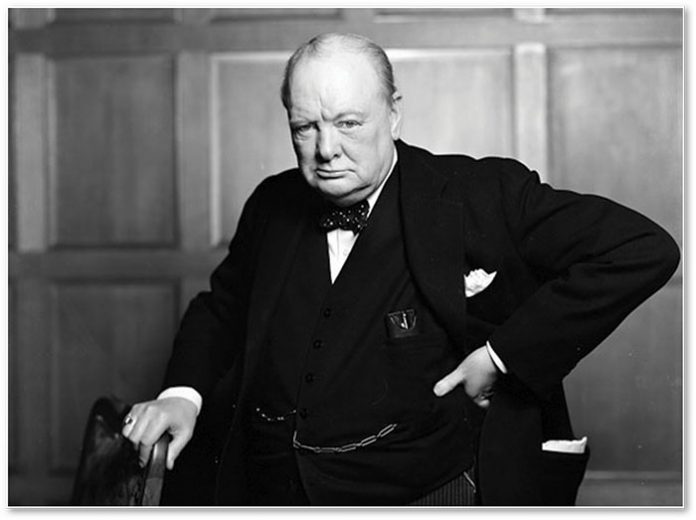
Winston Churchill: A Leader Who Shaped the 20th Century

johnbowe.info – Winston Churchill remains one of the most influential and iconic figures of the 20th century. A man of great intelligence, determination, and oratory skill, Churchill’s leadership during World War II helped to steer Britain through its darkest hours and played a significant role in shaping the outcome of the war. Known for his indomitable spirit, Churchill also served in various political roles throughout his career, leaving an indelible mark on both British and global history.

This article explores the life and legacy of Winston Churchill, his career in politics, his leadership during wartime, and the lasting impact of his work on world history.

Early Life and Education

Winston Leonard Spencer Churchill was born on November 30, 1874, at Blenheim Palace, Oxfordshire, England, into an aristocratic family. His father, Lord Randolph Churchill, was a prominent Conservative politician, and his mother, Jennie Jerome, was an American socialite. Raised in an environment of privilege, Churchill’s early life was marked by a complex relationship with his family and a series of academic challenges.

A Difficult Childhood

Churchill’s early years were fraught with difficulty. He struggled in school, failing to meet his father’s expectations and being frequently punished for his perceived lack of discipline. He attended the prestigious Harrow School, but his academic performance was inconsistent. Despite this, Churchill developed a keen interest in history and literature, subjects that would later shape his political thinking.

Churchill’s relationship with his father was strained, as Lord Randolph was an ambitious figure who hoped his son would follow in his political footsteps. However, Winston’s academic struggles led to his father’s disappointment, and they grew increasingly distant. Nevertheless, Winston was determined to carve his own path.

The Royal Military Academy and Early Career

Churchill’s desire for a military career led him to the Royal Military Academy Sandhurst, where he trained to become an officer in the British Army. After graduating in 1894, he was commissioned as a second lieutenant in the 4th Queen’s Own Hussars. Churchill’s early military career was marked by bravery and a thirst for adventure, as he participated in campaigns in India, Sudan, and South Africa.

It was during the Second Boer War in South Africa (1899-1902) that Churchill first gained significant public attention. As a war correspondent for the Morning Post, he was captured by the Boers and held as a prisoner of war. His daring escape and return to Britain made headlines, and it was here that Churchill began to cultivate his public persona as a man of courage and resolve.

Political Career and Early Leadership

Entry into Politics

Churchill entered politics in 1900 when he was elected as a Member of Parliament (MP) for Oldham, a constituency in northern England. Initially, he was a member of the Conservative Party, following in his father’s footsteps. However, his political beliefs evolved over time, and he soon became disillusioned with the party’s stance on various issues, including social reform and the treatment of workers.

In 1904, Churchill made the dramatic decision to leave the Conservative Party and join the Liberal Party, where he could more effectively advocate for progressive reforms. This move was controversial, but it marked the beginning of a new chapter in his political career. Over the years, Churchill became known for his fierce advocacy for social welfare programs, including unemployment insurance and the expansion of the welfare state.

Ministerial Roles

Throughout his early political career, Churchill held several important ministerial positions. He served as the President of the Board of Trade from 1908 to 1910, where he championed social reforms such as the introduction of labor laws and the expansion of worker protections. His tenure in this role solidified his reputation as a reformer and a champion of the working class.

Churchill later served as the Home Secretary (1910-1911) and First Lord of the Admiralty (1911-1915), where he gained further prominence for his military and naval leadership during World War I. As First Lord of the Admiralty, Churchill played a critical role in modernizing the Royal Navy and preparing Britain for the growing tensions in Europe.

The Gallipoli Campaign and Controversy

One of the defining moments of Churchill’s early career came during World War I, when he was one of the architects of the Gallipoli Campaign (1915). The operation, which aimed to open a new front by attacking the Ottoman Empire, ended in failure. The disastrous campaign led to significant losses and undermined Churchill’s standing within the government. He was blamed for the failure, and he resigned from his post as First Lord of the Admiralty.

Despite this setback, Churchill’s resilience remained evident. He returned to the frontlines, serving in the British Army on the Western Front. His determination to restore his reputation and prove his leadership abilities would eventually pay off.

Churchill’s Leadership During World War II

The Rise to Prime Minister

In the late 1930s, as Europe edged closer to the outbreak of war, Churchill’s warnings about the rising threat of Nazi Germany were increasingly ignored by British political leaders, including Prime Minister Neville Chamberlain. However, with the growing threat of Adolf Hitler and the invasion of Poland in 1939, Chamberlain’s leadership faltered. In 1940, with the situation growing more dire, Winston Churchill was appointed Prime Minister.

This marked the beginning of Churchill’s most defining period as a leader. His leadership during World War II would be characterized by his unwavering resolve, powerful speeches, and ability to rally the British public during the darkest days of the war.

The Battle of Britain

In 1940, after Germany had invaded France and other parts of Europe, Britain stood alone against the Nazi regime. Churchill’s most famous speeches during this period came as he inspired the British people to stand firm against the Luftwaffe’s aerial bombardment. The Battle of Britain, which lasted from July to October 1940, saw British forces successfully defend against German air raids. Churchill’s leadership throughout this period, particularly his defiant rhetoric, strengthened the resolve of the British people.

In his now-iconic speech delivered in August 1940, he declared, “Never in the field of human conflict was so much owed by so many to so few,” referring to the Royal Air Force pilots who fought off the German attacks.

The United States and the Atlantic Charter

One of Churchill’s key achievements during World War II was forging a close relationship with U.S. President Franklin D. Roosevelt. Though initially neutral in the war, the United States began to provide significant aid to Britain through programs like the Lend-Lease Act. In August 1941, Churchill and Roosevelt met aboard a ship in the Atlantic Ocean to sign the Atlantic Charter, a statement of principles that laid the groundwork for the post-war world order and the formation of the United Nations.

Churchill’s diplomacy and strong partnership with Roosevelt helped secure vital support for Britain, both militarily and economically, throughout the war.

The D-Day Invasion and Victory

In 1944, the Allies launched the D-Day invasion of Normandy, a pivotal moment in the war that marked the beginning of the end for Nazi Germany. Churchill, along with Roosevelt and other Allied leaders, played a critical role in planning the operation. The successful invasion, combined with the collapse of the German war machine, brought about the eventual Allied victory in Europe.

Churchill’s leadership throughout the war, particularly during times of extreme adversity, earned him a lasting place in history as a wartime hero.

Post-War Period and Legacy

The Election Loss and Return to Power

After the war, Churchill’s popularity was at an all-time high, but in the 1945 general election, the Labour Party led by Clement Attlee won a sweeping victory. Churchill was defeated, and the Labour government took office. However, Churchill remained a significant figure in British politics, and in 1951, he returned to power as Prime Minister once again.

During his second term, Churchill’s health began to decline, and his influence in the government gradually diminished. However, his legacy as a wartime leader and his role in shaping the post-war world continued to define his political career.

Posthumous Recognition and the Churchill Legacy

Winston Churchill passed away on January 24, 1965, at the age of 90. His death marked the end of an era in British politics, but his legacy lives on. Churchill is remembered as one of the greatest wartime leaders in history, a man whose leadership was crucial in the defeat of Nazi Germany and the preservation of democracy in Europe.

Churchill’s legacy extends beyond his wartime leadership. His speeches, his writings, and his influence on global diplomacy have left an indelible mark on history. In 1963, he was awarded the Nobel Prize in Literature for his historical writings, which include his multi-volume work on World War II and his history of the English-speaking peoples.

Conclusion

Winston Churchill’s life was one of remarkable achievements, personal resilience, and enduring influence. As a statesman, a writer, and a wartime leader, he played a pivotal role in shaping the course of history during the 20th century. His leadership during World War II, his defiance in the face of adversity, and his eloquent speeches continue to inspire generations. Churchill’s legacy remains firmly entrenched in the annals of history as a symbol of courage, conviction, and dedication to the ideals of freedom and democracy.

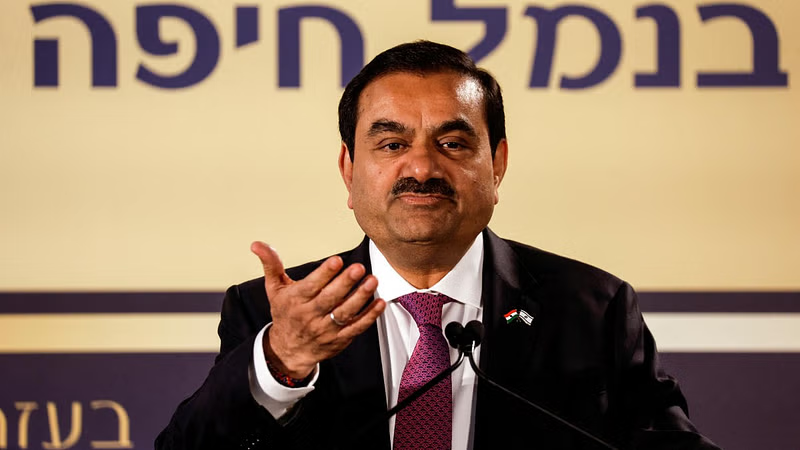
Gautam Adani: Indian Leader of the Adani Group

johnbowe.info – Gautam Adani is one of India’s most prominent business tycoons and the chairman of the Adani Group, a conglomerate with interests in sectors such as energy, infrastructure, mining, logistics, and agribusiness. With a reputation for transforming industries and an ambitious vision for India’s economic future, Adani has risen from humble beginnings to become one of the wealthiest individuals in India and the world. His story is one of perseverance, risk-taking, and extraordinary success in the face of challenges.

Early Life and Education

Gautam Shantilal Adani was born on June 24, 1962, in Ahmedabad, Gujarat, India, to a modest family. His father, Shantilal Adani, was a textile merchant, and Gautam grew up in a business-oriented environment. Despite facing financial constraints, Adani’s entrepreneurial spirit was evident early on. His desire to create wealth and succeed led him to drop out of college at the age of 18 to pursue his career in business.

Adani moved to Mumbai in the early 1980s to seek new opportunities. He began working as a diamond sorter, learning the ropes of international trade, which laid the foundation for his future ventures. Although his initial business ventures were modest, Adani’s keen understanding of market dynamics and his persistence eventually set the stage for his rise to prominence in the Indian business world.

The Birth of Adani Group

In 1988, Gautam Adani established Adani Enterprises, initially focusing on importing and trading commodities such as polyvinyl chloride (PVC) and chemicals. His big break came in 1994 when Adani was awarded the contract to manage the operations of the Mundra Port in Gujarat, which would go on to become the largest commercial port in India. This marked the beginning of a transformative period for both Adani and the country’s infrastructure sector.

As Adani expanded his interests into other areas, including power generation, coal mining, and logistics, his vision began to take shape. By 2006, the Adani Group had grown into a multinational conglomerate, with its interests spanning across critical sectors of the Indian economy. Adani’s focus on the infrastructure sector was a key driver of his success, as he capitalized on India’s rapidly expanding economy and the government’s push to modernize its infrastructure.

Expansion and Diversification: Power, Ports, and More

Gautam Adani’s strategy has always been to diversify the Adani Group’s portfolio and expand into sectors that would benefit from India’s growing economic and infrastructural needs. His investments in power generation were particularly noteworthy, as they allowed the Adani Group to become one of India’s leading players in the energy sector. The group now owns and operates coal-fired thermal power plants, renewable energy projects, and has significant investments in transmission and distribution.

One of the group’s key assets is Adani Power, which has become the largest private sector power producer in India. The company’s capacity to generate power from both conventional and renewable sources positions it as a leader in the Indian energy sector. Adani Green Energy, another company within the group, has made significant strides in solar and wind energy, contributing to India’s efforts to increase its renewable energy capacity.

The Adani Group’s port business, which started with the Mundra Port, has grown into a dominant force in the Indian logistics and transportation sector. Today, Adani Ports and Special Economic Zone (APSEZ) is India’s largest private port operator, with a network of ports and terminals across the country. APSEZ plays a critical role in India’s trade and logistics infrastructure, serving as a gateway for imports and exports.

In addition to energy and ports, Adani’s conglomerate has also made significant investments in sectors such as airports, agribusiness, and real estate. The group now operates several airports across India, including major hubs in Mumbai, Ahmedabad, and Lucknow, contributing to the modernization of India’s aviation infrastructure.

Risk-Taking and Strategic Acquisitions

One of the defining traits of Gautam Adani’s leadership has been his willingness to take calculated risks and pursue bold strategies. He has often made investments in sectors that are capital-intensive and require significant long-term planning. For example, his investments in infrastructure and power generation required not only significant capital but also a deep understanding of regulatory frameworks and operational challenges.

Adani’s strategic acquisitions have been crucial to the expansion of his business empire. The acquisition of the Carmichael coal mine in Australia is a prime example of his long-term vision. Despite facing criticism from environmental groups and challenges in financing the project, Adani pressed ahead with the development of the mine, which is expected to be a major supplier of coal for Adani’s power plants in India.

Additionally, the group has made major investments in the renewable energy sector, positioning itself as a key player in India’s transition to a low-carbon economy. Through Adani Green Energy, the group has become one of the world’s largest solar energy companies, with a significant portfolio of renewable energy projects across India.

Philanthropy and Social Responsibility

Despite his commercial success, Gautam Adani is also known for his philanthropic efforts. Through the Adani Foundation, he has supported a wide range of social causes, including education, healthcare, rural development, and environmental sustainability. The foundation focuses on empowering communities in rural India, particularly in Gujarat, where the Adani Group’s operations are centered.

Adani’s philanthropic initiatives also extend to disaster relief and support for underprivileged communities. The Adani Foundation’s efforts in education, particularly for marginalized groups, have earned the group recognition for its commitment to social responsibility.

Personal Life and Leadership Style

Gautam Adani’s leadership style is characterized by a combination of ambition, perseverance, and a willingness to challenge conventional norms. He is known for his strategic vision and his ability to steer the Adani Group through changing economic and political landscapes. His leadership has been instrumental in expanding the Adani Group into a multinational corporation, with operations spanning multiple industries and countries.

Adani maintains a relatively private personal life. He is married to Priti Adani, and the couple has two sons. Despite his immense wealth and influence, Adani is known for his focus on his business and his commitment to his work, often avoiding the public spotlight.

Legacy and Future Outlook

Gautam Adani’s success story is one of resilience and innovation. From starting with a small trading business to building a global conglomerate, Adani has reshaped several key industries in India. His leadership has played a crucial role in India’s development, particularly in the energy, infrastructure, and logistics sectors.

As the Adani Group continues to expand its operations and diversify into new sectors, Gautam Adani’s legacy is expected to grow. His strategic focus on energy, infrastructure, and sustainability positions the group well for future growth, particularly as India continues to modernize its infrastructure and transition to renewable energy sources.

In the coming years, Adani’s influence on both the Indian and global business landscapes will likely continue to grow. His ability to identify opportunities, take risks, and lead large-scale projects positions him as one of the most important business leaders of his generation.

Conclusion

Gautam Adani’s rise to the top of India’s business world is a story of entrepreneurship, vision, and ambition. Through the Adani Group, he has transformed India’s infrastructure and energy sectors, creating a conglomerate that spans multiple industries and plays a crucial role in the country’s economic development. With his continued focus on innovation, sustainability, and global expansion, Adani’s impact on India and the world is poised to grow in the years ahead.