
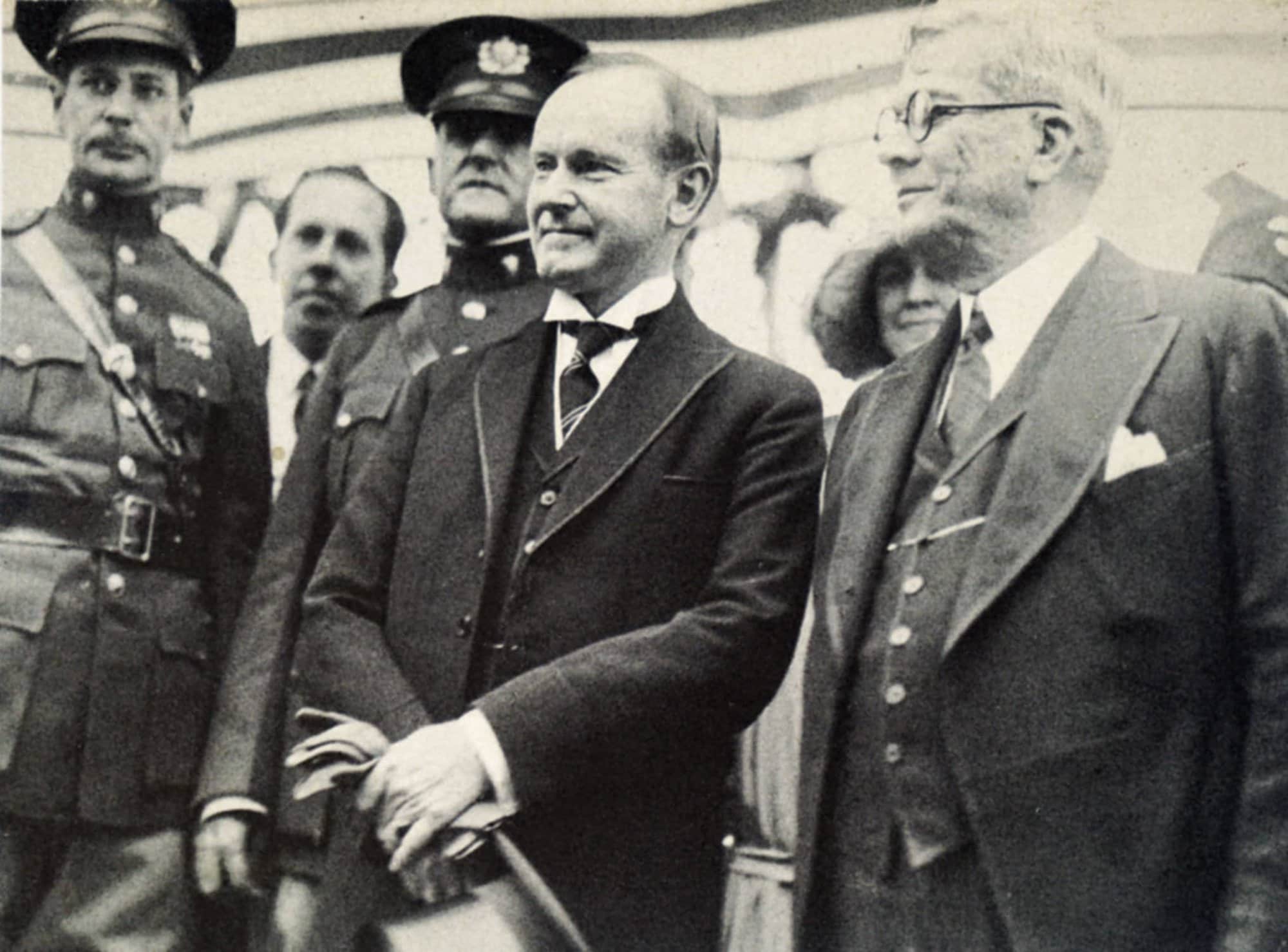
johnbowe.info – Calvin Coolidge, the 30th President of the United States, was a political figure whose leadership left a lasting imprint on the Republican Party and American political thought. Coolidge’s presidency, from 1923 to 1929, marked a defining moment for the Republican Party as it navigated a time of great economic prosperity, societal change, and shifting political landscapes. While Coolidge’s personal demeanor was often characterized by restraint and quiet leadership, his policies, political philosophy, and commitment to conservative principles played a pivotal role in shaping the Republican Party of the 20th century. His vision of limited government, fiscal conservatism, and pro-business policies became the foundation for much of the party’s ideology and continued to influence its direction for decades to come.
This article will explore Calvin Coolidge’s critical role in shaping the Republican Party during the early 20th century, how his leadership and principles helped define the party’s platform, and how his legacy continues to resonate within the Republican Party today.
The Republican Party in the Early 20th Century
Before examining Coolidge’s impact on the Republican Party, it’s important to understand the political context of the time. The early 20th century was a period of profound transformation in American politics, economy, and society. The Republican Party had traditionally been the party of business, industry, and economic growth, and its principles of free-market capitalism, individual responsibility, and limited government had shaped much of its identity. However, the early decades of the 20th century saw shifts in the political landscape, particularly as the Progressive Era, led by figures like Theodore Roosevelt, redefined the role of government in American life.
The Progressive movement, which sought to address issues like monopolies, corruption, and social injustices, had a significant influence on the Republican Party, especially under President Theodore Roosevelt. Roosevelt’s “Square Deal” policies promoted government regulation to protect workers, consumers, and the environment. Though Roosevelt was a Republican, his progressive policies often put him at odds with more traditional, laissez-faire conservatives within the party.
When President William Howard Taft succeeded Roosevelt in 1909, the Republican Party became deeply divided between those who favored progressive reforms and those who adhered to a more conservative, hands-off approach to government. This division culminated in the 1912 presidential election, which saw Roosevelt run as a third-party candidate under the Progressive Party, splitting the Republican vote and leading to the election of Democrat Woodrow Wilson.
After the tumultuous political upheavals of the early 20th century, the Republican Party needed to rebuild its identity and regain the trust of the American people. This is where Calvin Coolidge’s leadership would play a crucial role.
Coolidge’s Rise to Power and His Influence on the Republican Party
Coolidge’s political rise was not one marked by flamboyant speeches or radical reforms but by a steady and disciplined commitment to conservative principles. Coolidge, who served as the governor of Massachusetts, gained national prominence for his handling of the Boston Police Strike of 1919. In a time of labor unrest, Coolidge’s firm stance in supporting law and order—he famously declared, “There is no right to strike against the public safety by anybody, anywhere, anytime”—made him a hero to conservatives and business leaders alike. His handling of the strike demonstrated his commitment to law, order, and the primacy of business interests over the demands of labor unions, aligning him closely with the conservative wing of the Republican Party.
When Warren G. Harding became president in 1921, Coolidge was selected as his running mate and became vice president. After Harding’s death in 1923, Coolidge ascended to the presidency. His calm demeanor and steadfast commitment to conservative principles provided a stabilizing force for the Republican Party, which was still recovering from the divisions caused by the Progressive movement and the election of 1912.
Coolidge’s presidency marked the beginning of a new phase for the Republican Party—a return to its roots in fiscal conservatism, limited government, and pro-business policies. His leadership helped to solidify the Republican Party as the party of business and economic growth, a reputation that would define the party for much of the 20th century.
The Conservative Revival: Coolidge’s Impact on the Republican Platform
Coolidge’s policies were instrumental in defining the Republican platform during his time in office and setting the stage for the party’s direction in the years to come. As president, Coolidge emphasized fiscal responsibility, low taxes, and minimal government intervention in the economy—principles that would become central to the Republican Party’s identity for much of the 20th century.
Fiscal Conservatism and Limited Government
One of Coolidge’s most significant contributions to the Republican Party was his commitment to fiscal conservatism. Coolidge strongly believed that government spending should be kept to a minimum, and that the government should not interfere with the natural workings of the free market. Under his leadership, the federal government reduced its budget by nearly 50%, cutting taxes and reducing the national debt. He believed that by lowering taxes, individuals and businesses would have more freedom to invest and create wealth, which would, in turn, benefit the entire country.
Coolidge’s commitment to limited government and fiscal discipline resonated with many Republicans who felt that the government had grown too large and too involved in the lives of its citizens. His approach to economic policy emphasized a hands-off government that allowed businesses and individuals to flourish. This view became a defining characteristic of the Republican Party, influencing conservative politicians for decades to come.
Pro-Business Policies and Economic Growth
Another key aspect of Coolidge’s legacy was his staunch pro-business stance. He believed that the role of government was to create a stable economic environment where businesses could thrive without excessive regulation or interference. Coolidge’s administration worked to reduce government regulations on businesses, which he believed stifled growth and innovation. He also championed policies that favored economic expansion, such as tax cuts for corporations and individuals, and the protection of private property rights.
Under Coolidge’s leadership, the U.S. economy experienced rapid growth, with the country enjoying one of the most prosperous periods in its history—the “Roaring Twenties.” The stock market boomed, unemployment remained low, and consumer goods became more affordable and accessible. Coolidge’s policies created a climate of economic optimism, and the Republican Party became firmly associated with business interests and economic success.
Protectionism and the Republican Commitment to American Interests
During Coolidge’s presidency, the Republican Party also took a more protectionist stance on trade. While Coolidge was a supporter of free markets, he also recognized the importance of protecting American industries from foreign competition. In 1922, Coolidge signed the Fordney-McCumber Tariff, which raised tariffs on imported goods to protect American businesses. This policy was in line with the Republican Party’s long-standing commitment to protecting American industries and ensuring that American workers had the opportunity to compete on a level playing field.
The protectionist policies enacted under Coolidge were part of a broader effort to strengthen American business interests and create an economic environment that favored domestic growth. These policies reflected the Republican Party’s vision of a strong, self-reliant economy that was not overly dependent on foreign trade or investment.
Coolidge’s Influence on Republican Foreign Policy
Coolidge’s impact on the Republican Party was not limited to domestic economic policies; he also shaped the party’s approach to foreign policy. While Coolidge was not as involved in international affairs as some of his predecessors, he adhered to a pragmatic approach that prioritized peace, stability, and American interests.
Coolidge’s foreign policy was marked by a commitment to peace and non-intervention. He advocated for disarmament and signed the Kellogg-Briand Pact in 1928, a treaty that renounced war as a means of resolving international disputes. Coolidge’s belief in the value of diplomacy over military conflict reflected the Republican Party’s desire to maintain American independence and avoid entangling the United States in foreign conflicts.
However, Coolidge also recognized the importance of maintaining strong economic ties with other countries. He pursued policies that sought to promote American economic interests abroad, while also ensuring that the United States remained a dominant economic power on the world stage.
Coolidge’s Legacy and Its Impact on the Republican Party
Calvin Coolidge’s presidency and political philosophy left an indelible mark on the Republican Party, influencing its ideology and direction for many years. Coolidge’s commitment to fiscal conservatism, limited government, and pro-business policies became a cornerstone of the Republican Party’s platform in the 20th century. His leadership helped to solidify the party’s position as the party of business, economic growth, and individual responsibility.
In the years following Coolidge’s presidency, many Republican leaders continued to embrace the principles he championed. Figures like Dwight D. Eisenhower, Ronald Reagan, and others who sought to promote limited government and free-market principles found inspiration in Coolidge’s example. His belief in the power of individuals and businesses, and his commitment to reducing the role of government, continued to shape the party’s ideology for decades.
Coolidge’s influence on the Republican Party was particularly evident during times of economic hardship, such as the Great Depression and the financial crises of the 1970s. Conservative politicians turned to Coolidge’s example to argue for tax cuts, government spending reductions, and a return to fiscal responsibility as solutions to economic challenges.
Conclusion
Calvin Coolidge’s role in shaping the Republican Party of the 20th century cannot be overstated. His commitment to fiscal conservatism, limited government, and pro-business policies laid the groundwork for the party’s ideological direction for decades. Coolidge’s presidency marked the beginning of a new phase for the Republican Party, as it returned to its traditional values of economic growth, individual responsibility, and minimal government intervention.
Through his quiet but resolute leadership, Coolidge helped to redefine the Republican Party as the party of business, prosperity, and limited government, leaving a legacy that continues to influence American politics today.

