Rutherford B. Hayes: The 19th President of the United States

johnbowe.info – Rutherford B. Hayes, the 19th President of the United States, served from 1877 to 1881 during a tumultuous period in American history. His presidency was marked by significant controversy, political compromises, and an era of post-Civil War reconstruction. Despite his relatively short time in office, Hayes played a pivotal role in shaping the direction of the nation as it moved away from the Civil War’s aftermath and toward industrialization and modernization.

Early Life and Background

Early Years and Education

Rutherford Birchard Hayes was born on October 4, 1822, in Delaware, Ohio. The son of Rutherford Hayes, a farmer, and Sophia Birchard, Hayes had a privileged upbringing, benefiting from his mother’s strong education and influence. His father, who died before he was born, left the family with little financial support, but Sophia ensured her son received a strong education.

Hayes attended Kenyon College in Ohio, graduating in 1842. His academic success continued at Harvard Law School, where he earned his law degree in 1845. He was admitted to the bar in 1845 and began practicing law in his hometown of Fremont, Ohio.

Military Service in the Civil War

Hayes’ path to public service took a sharp turn when the Civil War broke out in 1861. Despite his initial reluctance to enlist, Hayes ultimately joined the Union Army and served with distinction. He was a major during the conflict and saw combat in several major battles, earning a reputation as a brave and competent leader.

Hayes was wounded multiple times during the war and was promoted to the rank of brevet major general by 1865. His military service not only shaped his character but also garnered him political support after the war. He was a strong advocate for the Union cause, and his service played a key role in establishing his reputation as a man of integrity and commitment.

Political Rise and the Road to the Presidency

State and Congressional Politics

After the Civil War, Hayes turned his attention to politics. He was elected as the governor of Ohio in 1867 and served three non-consecutive terms (1867–1877). During his tenure, Hayes focused on issues such as civil rights for former slaves and government reform.

In 1876, Hayes ran for president as the Republican nominee in one of the most contentious elections in U.S. history. His opponent, Democrat Samuel J. Tilden, had won the popular vote and appeared to have won the electoral college as well. However, a disputed election in several states led to widespread accusations of voter fraud and corruption.

The Controversial 1876 Election

The election of 1876 was one of the most controversial and hotly contested in U.S. history. Tilden won 184 electoral votes, just one shy of the 185 needed for victory. Hayes, on the other hand, had 165 electoral votes, with 20 votes still in dispute in four Southern states—Florida, Louisiana, South Carolina, and Oregon.

The election’s outcome was uncertain, and both sides claimed victory. Amid allegations of electoral fraud, Congress established a 15-member electoral commission to resolve the dispute. The commission, which consisted of eight Republicans, seven Democrats, and one independent, ultimately decided in favor of Hayes, awarding him all 20 contested electoral votes.

The decision was controversial and led to widespread protests, especially among Democrats. Many saw the decision as a political compromise that effectively ended the Reconstruction era in the South.

Presidency of Rutherford B. Hayes

The Compromise of 1877

Hayes’ victory in the 1876 election was made possible by the Compromise of 1877, a political deal between Republicans and Southern Democrats. In exchange for supporting Hayes’ presidency, Republicans agreed to withdraw federal troops from the Southern states, effectively ending Reconstruction.

This compromise was seen by many as a betrayal of the rights and freedoms of African Americans in the South. With the removal of federal troops, Southern states were free to enact discriminatory laws, leading to the establishment of segregation and the rise of white supremacy in the region. While the compromise was seen as a way to restore peace and heal the nation after the Civil War, it also marked the beginning of a long period of racial tension and inequality in the South.

Civil Service Reform and Government Reform

One of Hayes’ most significant accomplishments as president was his commitment to civil service reform. He sought to end the widespread practice of political patronage, which had led to government corruption and inefficiency. In 1877, Hayes signed an executive order that banned federal officeholders from participating in political campaigns, and in 1880, he supported the passage of the Pendleton Civil Service Reform Act, which created a merit-based system for hiring federal employees.

Hayes’ reform efforts earned him praise from reformers but also angered many political machines that had relied on patronage to maintain their power. His commitment to civil service reform was one of the hallmarks of his presidency, and it laid the foundation for future reforms in the federal government.

The End of Reconstruction

As a result of the Compromise of 1877, Hayes was able to end the Reconstruction era. While he had promised to protect the rights of African Americans, his ability to enforce these promises was severely limited without the presence of federal troops in the South. As a result, the withdrawal of troops marked the end of federal efforts to protect the civil rights of former slaves.

The end of Reconstruction allowed Southern states to implement Jim Crow laws that disenfranchised African Americans and segregated them from white society. The federal government, under Hayes’ leadership, largely abandoned its responsibility to enforce civil rights laws in the South, leading to decades of racial discrimination and inequality.

Foreign Policy and International Relations

Hayes’ foreign policy was relatively uneventful compared to his domestic agenda. One notable event during his presidency was the negotiation of a treaty with China to limit Chinese immigration to the United States. The Chinese Exclusion Act of 1882, which was passed shortly after Hayes left office, was a response to growing anti-Chinese sentiment in the West.

Hayes also sought to improve relations with Latin American countries, particularly in the context of trade and economic cooperation. However, his foreign policy was generally overshadowed by the political challenges and domestic issues he faced during his presidency.

The Legacy of Rutherford B. Hayes

A Controversial Presidency

Rutherford B. Hayes’ presidency was marked by political controversy, particularly surrounding the disputed 1876 election and the Compromise of 1877. While he is often praised for his efforts at civil service reform and his commitment to integrity in government, his presidency is also viewed critically for its failure to address the lingering racial issues in the South after the Civil War.

Hayes’ decision to end Reconstruction and withdraw federal troops from the South is often seen as a betrayal of African Americans and a missed opportunity to secure civil rights for former slaves. The political compromise that made Hayes president also paved the way for the rise of segregation and the disenfranchisement of African Americans in the South.

Reform and Government Accountability

Despite the controversy, Hayes’ commitment to reform and good governance is one of the most enduring aspects of his legacy. His efforts to reduce political corruption through civil service reform helped lay the foundation for future progress in creating a more efficient and accountable federal government.

Hayes’ presidency also marked a transition from the Reconstruction era to the Gilded Age, a period of rapid industrialization, economic growth, and social change. Although he was not able to achieve all of his goals, his presidency reflected the challenges faced by a nation recovering from a bloody civil war and navigating the complexities of a rapidly changing world.

Conclusion

Rutherford B. Hayes, the 19th President of the United States, remains one of the more controversial figures in American history. While he made important strides in civil service reform and sought to end government corruption, his presidency is often remembered for its role in ending Reconstruction and allowing the South to implement discriminatory laws that would impact African Americans for generations to come.

His presidency serves as a reminder of the challenges of reconciling the nation’s divisions after the Civil War and the difficult compromises that were made during this time of transition. Although Hayes was not able to fulfill all of his lofty promises, his legacy as a reformer and his commitment to integrity continue to shape his place in American history.
George Washington: The First President of the United States

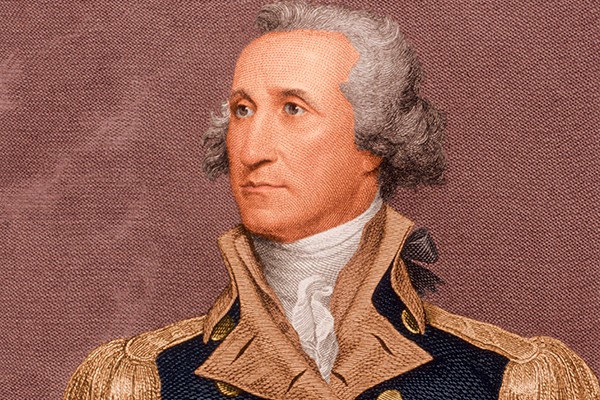
johnbowe.info – George Washington stands as one of the most iconic figures in American history. As the first President of the United States, his leadership and actions played a crucial role in shaping the nation’s future. His journey from military commander to founding father and then to the first president of the United States is a remarkable story that continues to influence the nation’s identity.

Early Life and Background

Birth and Family

George Washington was born on February 22, 1732, in Westmoreland County, Virginia. His father, Augustine Washington, was a prosperous landowner, and his mother, Mary Ball Washington, was a woman of strong character. Washington was the eldest of six children and grew up in a well-to-do but rural Virginia household.

Education and Early Career

Although Washington did not have a formal education like many of his contemporaries, he was well-educated in practical matters. At a young age, he was taught mathematics, surveying, and other practical subjects, which would prove invaluable throughout his life. At 16, he began working as a land surveyor, and by the time he was 20, he had become involved in military service during the French and Indian War. This military experience would lay the groundwork for his future leadership.

The Revolutionary War: Washington’s Leadership in Crisis

The Start of Military Leadership

Washington’s role in the French and Indian War helped establish his military reputation. Although the conflict was a British colonial war, Washington served with distinction and learned valuable lessons in both strategy and leadership. However, it was during the American Revolutionary War that Washington’s true potential as a military leader was realized.

When the Revolutionary War broke out in 1775, the Continental Congress appointed Washington as the Commander-in-Chief of the Continental Army. Washington was a natural choice for the role, as he was a well-respected figure with experience in leadership and strategy.

Key Battles and Strategies

Washington’s leadership during the Revolutionary War was tested in several key battles, such as the Battle of Trenton, the Battle of Saratoga, and the harsh winter at Valley Forge. Despite many early setbacks, Washington’s ability to inspire his troops and make strategic decisions played a significant role in the eventual success of the Continental Army. His leadership during the winter of 1777-1778 at Valley Forge, where he kept his troops together despite dire conditions, became one of the defining moments of his military career.

The Final Victory

The decisive victory at the Battle of Yorktown in 1781, with the help of French forces, effectively ended the Revolutionary War and led to the Treaty of Paris in 1783. This treaty recognized American independence, and Washington’s leadership throughout the conflict earned him the admiration of both his fellow countrymen and foreign allies.

The Road to the Presidency

The Post-Revolutionary Era

After the Revolutionary War, Washington returned to private life at Mount Vernon, his plantation in Virginia. However, the new nation was struggling with issues such as a weak central government, economic instability, and internal divisions. Recognizing the need for a stronger, more unified government, Washington was called upon once again.

In 1787, Washington attended the Constitutional Convention in Philadelphia, where he was unanimously elected to preside over the proceedings. His influence was crucial in the drafting of the U.S. Constitution, which would replace the Articles of Confederation and establish a stronger federal government. Washington’s support of the Constitution helped to ensure its ratification.

Election to the Presidency

When the new Constitution was ratified in 1789, Washington was the clear choice for the nation’s first president. He was elected unanimously by the Electoral College, and on April 30, 1789, he was sworn in as the first President of the United States. Washington’s election was a testament to the trust the American people had in his leadership.

Washington’s Presidency

Establishing Precedents

Washington’s presidency was characterized by the establishment of precedents that would shape the future of the United States. He carefully balanced the power of the executive branch, ensuring that the presidency was strong but not overbearing. One of his first acts was to establish the Cabinet, a group of advisors who would assist him in running the government. Washington also set a precedent by stepping down after two terms, reinforcing the idea of peaceful transitions of power.

Domestic and Foreign Challenges

Washington’s presidency was not without its challenges. Domestically, he had to address economic issues, such as the national debt, and manage the conflict between Federalists and Anti-Federalists. He appointed Alexander Hamilton as his Secretary of the Treasury, and together, they worked to create a sound financial system for the young nation.

In foreign policy, Washington sought to keep the United States neutral in the conflicts between European powers, especially the wars between Britain and France. His Neutrality Proclamation of 1793 established the principle that the United States would avoid entangling alliances with foreign nations.

The Whiskey Rebellion

One of the most significant domestic challenges Washington faced was the Whiskey Rebellion of 1794. Farmers in western Pennsylvania rebelled against a federal excise tax on whiskey. Washington responded decisively, sending federal troops to suppress the rebellion. This demonstrated the strength of the new federal government and its ability to maintain order.

Washington’s Legacy

Stepping Down and Retirement

After serving two terms in office, Washington chose not to seek a third term, setting a precedent for future presidents. In his farewell address, he warned against the dangers of political parties and foreign entanglements. Washington’s decision to step down helped to solidify the principle of democratic leadership, where the president was not a monarch and power was transferred peacefully.

Washington returned to Mount Vernon, where he lived for just a few more years. He passed away on December 14, 1799, at the age of 67. His death marked the end of an era, but his legacy as the “Father of His Country” endures.

Lasting Impact

George Washington’s impact on the United States cannot be overstated. His leadership during the Revolutionary War helped secure American independence. His presidency set critical precedents for the role of the president and the functioning of the federal government. Even in retirement, Washington remained a symbol of unity and strength.

Today, Washington’s legacy continues to be honored through monuments, place names, and his place in the hearts of the American people. His life and actions laid the foundation for the nation, and his vision of a free, independent, and unified country continues to guide the United States.

Donald Trump: The 45th President of the United States

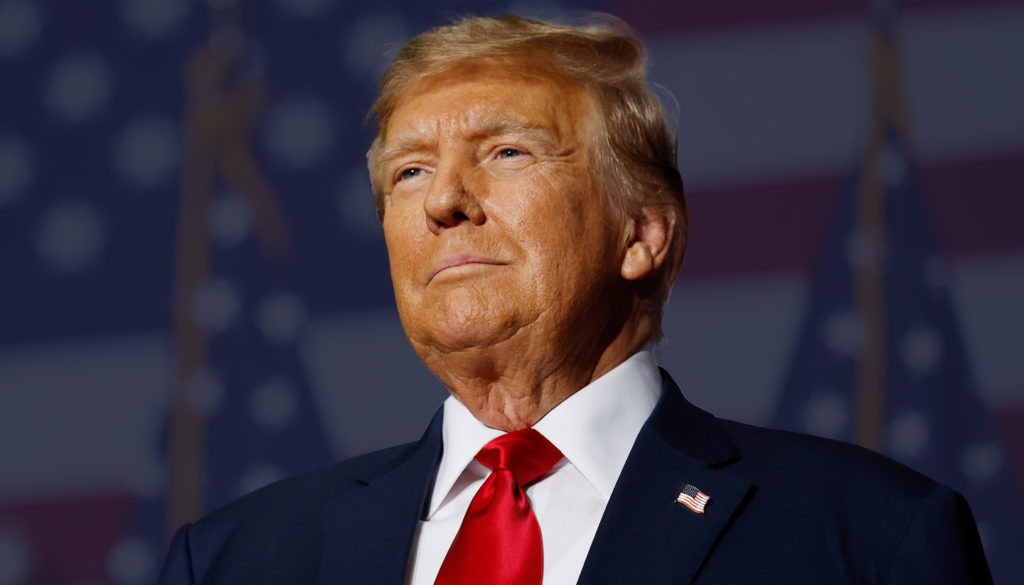
johnbowe.info – Donald John Trump, the 45th President of the United States, served from January 20, 2017, to January 20, 2021. A businessman and television personality, Trump entered politics with no prior governmental experience and quickly became one of the most controversial and divisive figures in modern American history. His presidency was marked by bold policies, significant political polarization, and a wide range of legal and social challenges.

Early Life and Business Career

Childhood and Education

Donald Trump was born on June 14, 1946, in Queens, New York City, to Fred and Mary Trump. His father was a prominent real estate developer, which exposed young Donald to the world of business early on. Trump attended the New York Military Academy, a private school, before enrolling at Fordham University. He later transferred to the University of Pennsylvania, where he earned a degree in economics from the Wharton School in 1968.

The Trump Organization

After completing his education, Trump took control of his father’s real estate empire, which he renamed The Trump Organization. Initially, he expanded the company’s operations in Queens and Brooklyn, but he soon began to target high-profile properties in Manhattan. The Trump Organization went on to develop iconic buildings, including the Trump Tower in New York City, which became a symbol of Trump’s larger-than-life persona.

Trump also ventured into various industries, including casinos, hotels, and golf courses, often using his name as a branding tool. While his business ventures saw success in many instances, they were not without their setbacks. Trump’s casinos, for example, faced financial difficulties, leading to bankruptcies in the 1990s. However, despite these challenges, Trump maintained his public image as a successful businessman.

Entering Politics: The 2016 Presidential Campaign

The Campaign Announcement

In June 2015, Trump made a stunning announcement that he would run for president of the United States. His entry into the race was met with skepticism by many political analysts and media outlets, who doubted that someone with no political or military experience could succeed. Trump, however, used his celebrity status to attract significant media attention. He focused on issues such as immigration, trade, and job creation, while positioning himself as an outsider who would “drain the swamp” of Washington, D.C.

Trump’s early campaign rhetoric was polarizing, particularly his stance on immigration. He famously called for a wall to be built along the southern border of the United States to prevent illegal immigration, particularly from Mexico. This controversial proposal, along with his direct and often combative style, quickly set him apart from other candidates in the Republican primary.

The Republican Primary

Trump’s unorthodox approach to campaigning and his willingness to speak bluntly earned him both fervent supporters and vocal critics. He clashed with many of the other candidates in the Republican field, including establishment figures like Jeb Bush, Marco Rubio, and Ted Cruz. Despite being written off by many, Trump’s blunt rhetoric and promise to “Make America Great Again” resonated with a significant portion of the American electorate, particularly working-class voters in key battleground states.

His success in the Republican primary was in large part due to his ability to speak to the frustrations of many Americans who felt left behind by globalization and political elites. Trump’s campaign also capitalized on widespread dissatisfaction with the status quo in Washington, leading him to secure the Republican nomination in July 2016.

The 2016 Presidential Election

The General Election Campaign

In the general election, Trump faced off against former Secretary of State Hillary Clinton. The campaign was marked by intense negativity and personal attacks on both sides. Trump frequently criticized Clinton’s use of a private email server while she was Secretary of State, and he faced his own controversies, including the release of the infamous “Access Hollywood” tape, in which he was heard making lewd comments about women.

Despite the media frenzy surrounding these controversies, Trump’s base of support remained solid. He continued to focus on issues like trade, immigration, and American exceptionalism, while Clinton struggled to connect with certain segments of the electorate. Trump’s populist rhetoric and promises to restore American jobs and reassert American strength resonated strongly with many voters in key swing states such as Michigan, Wisconsin, and Pennsylvania.

The Election Outcome

In a shocking turn of events, Trump won the Electoral College, securing 304 electoral votes to Clinton’s 227. However, Clinton won the popular vote by nearly 2.9 million votes, which led to widespread debate about the role of the Electoral College in American democracy. Trump’s victory was seen as a political earthquake, upending decades of political norms and establishing him as the leader of the Republican Party.

Presidency of Donald Trump

Early Actions and Executive Orders

Upon taking office in January 2017, Trump wasted no time in implementing his campaign promises. He signed a series of executive orders, including a controversial travel ban targeting predominantly Muslim countries. The ban was initially blocked by the courts but was later upheld in a modified form by the Supreme Court.

Trump also focused on deregulation, particularly in the environmental and financial sectors. His administration rolled back a number of Obama-era regulations, arguing that they were stifling economic growth and job creation. Additionally, Trump pushed for tax cuts, culminating in the Tax Cuts and Jobs Act of 2017, which reduced corporate tax rates and aimed to stimulate the economy.

Impeachment

Trump’s presidency was marred by several controversies, including two impeachment proceedings. In December 2019, the House of Representatives impeached him on charges of abuse of power and obstruction of Congress related to his dealings with Ukraine. The charges stemmed from a phone call in which Trump allegedly pressured the Ukrainian president to investigate Joe Biden, his potential 2020 political rival. In February 2020, the Senate acquitted Trump on both charges, but the impeachment left a significant mark on his presidency.

The 2020 Election and Final Year

The 2020 presidential election, held amid the COVID-19 pandemic, was one of the most contentious in American history. Trump’s handling of the pandemic and his controversial statements about public health measures led to a sharp division in the electorate. His opponent, former Vice President Joe Biden, capitalized on dissatisfaction with Trump’s leadership and won the election with 306 electoral votes to Trump’s 232.

Trump refused to concede the election, falsely claiming that the election had been “stolen” due to widespread voter fraud. His claims were widely debunked, but the rhetoric fueled a dangerous level of political polarization. This culminated in the January 6, 2021, storming of the U.S. Capitol by a mob of Trump supporters, an event that led to Trump’s second impeachment by the House of Representatives on charges of incitement of insurrection. However, Trump was acquitted again by the Senate, leaving the nation deeply divided.

Legacy and Impact

Political Polarization

Trump’s presidency amplified political divisions within the United States. His combative style, use of social media, and disregard for traditional political norms contributed to an increasingly polarized political climate. While his supporters viewed him as a champion of conservative values and a defender of American interests, his critics saw him as a destabilizing force who undermined democratic institutions and norms.

Influence on the Republican Party

Trump’s impact on the Republican Party has been profound. He reshaped the party’s identity, moving it away from its traditional establishment conservatism and embracing a populist, nationalist platform. Trump’s influence continues to be felt in the Republican Party, as many of his allies hold key positions in government and the party’s base remains loyal to him.

The Trump Era in American Politics

The era of Donald Trump has left an indelible mark on American politics. His presidency challenged many longstanding political conventions and changed the way Americans view government, media, and democracy itself. Whether viewed as a disruptor or a demagogue, Trump’s influence on American political discourse remains significant, and his legacy will likely continue to shape the nation for years to come.