Benjamin Harrison and the Struggle for African American Rights

johnbowe.info – Benjamin Harrison, the 23rd President of the United States, served from 1889 to 1893 during a time of intense racial tension and inequality in the country. The post-Reconstruction era was a period marked by significant struggles for African Americans, as they faced continued disenfranchisement, segregation, and violence. Although Harrison’s presidency is often overshadowed by other aspects of his administration, his actions and policies regarding African American rights are crucial to understanding the broader fight for racial equality during the late 19th century.

Despite the challenges of the time, Benjamin Harrison’s tenure witnessed some notable efforts in the fight for African American civil rights. Though Harrison’s presidency was not a period of sweeping legal reforms in favor of African Americans, his administration laid the groundwork for future racial justice struggles. This article will examine Harrison’s policies and actions related to African American rights, as well as the broader context of the racial climate of the late 19th century.

The Political and Social Climate for African Americans in the Late 19th Century

The Aftermath of Reconstruction

The period following the Civil War, known as Reconstruction, was a brief but critical time in American history when African Americans gained significant political, social, and legal rights. During Reconstruction, Congress passed landmark legislation, including the 13th, 14th, and 15th Amendments—abolishing slavery, granting citizenship and equal protection under the law, and protecting voting rights for African Americans. African Americans made substantial political gains, especially in the Southern states, where many were elected to public office.

However, after Reconstruction ended in 1877 with the withdrawal of federal troops from the South, white supremacy was swiftly reasserted. Southern states began passing Jim Crow laws, which enforced racial segregation and disenfranchised African Americans. Voter suppression techniques, such as poll taxes, literacy tests, and violence from groups like the Ku Klux Klan, significantly undermined African Americans’ political power.

By the time Benjamin Harrison assumed the presidency in 1889, the country was embroiled in a racial hierarchy that restricted African Americans’ access to full civil rights. Racial segregation was prevalent in the South, and northern cities, while not as overtly segregated, still maintained racially discriminatory policies in housing, employment, and education.

The Influence of the Civil Rights Movement

Though the post-Reconstruction period was a time of intense setbacks for African American rights, it was also a period in which activism and resistance began to take root. The late 19th century saw the development of organizations and individuals dedicated to fighting for racial equality, notably Frederick Douglass, Ida B. Wells, and Booker T. Washington. Their work would lay the foundation for the civil rights movements that would gain prominence in the 20th century.

During Harrison’s presidency, African American leaders advocated for the end of racial discrimination, the extension of civil rights, and the protection of voting rights. However, the entrenched political and social systems meant that significant legislative reforms would be slow to materialize. Despite these challenges, Harrison’s presidency was not completely devoid of attention to African American rights.

Harrison’s Efforts to Promote African American Rights

Appointment of African Americans to Government Positions

One of Benjamin Harrison’s most significant contributions to African American civil rights was his appointments of African Americans to federal offices. Harrison was one of the few presidents of the time who made efforts to involve African Americans in public service and government positions, especially in areas where African American communities were growing or had significant influence.

Frederick Douglass

One of Harrison’s most notable appointments was that of Frederick Douglass, the renowned abolitionist and former slave, who was appointed as the U.S. Minister to Haiti in 1889. Douglass had already achieved fame as a writer, orator, and abolitionist, and his appointment was seen as an acknowledgment of African American capabilities in the highest levels of government. As U.S. Minister to Haiti, Douglass played a critical role in strengthening diplomatic relations between the United States and Haiti, as well as advocating for the rights of African Americans.

Douglass’s appointment was a groundbreaking moment, as it represented the elevation of an African American to an important diplomatic post in the federal government, breaking racial barriers in foreign diplomacy. Harrison’s willingness to appoint Douglass was a significant departure from the often entrenched racial discrimination of the time.

Other Appointments

Beyond Douglass, Harrison appointed several other African Americans to government positions. For instance, Thomas L. Jennings was appointed as a commissioner for the 1890 census, becoming the first African American to hold such a position. Harrison also appointed John M. Langston, a former congressman and the first African American to be elected to Congress from Virginia, as the U.S. minister to Haiti prior to Douglass. These appointments reflected Harrison’s commitment to providing African Americans with opportunities in public office, despite the prevailing racial biases of the time.

Efforts to Protect Voting Rights

Despite the widespread disenfranchisement of African Americans in the South due to voter suppression laws, Harrison made some efforts to address the issue of voting rights. The election of 1888, which Harrison won by a narrow margin, highlighted the fact that voter suppression in the South had significant political consequences. It became apparent that the South’s racial discrimination was directly influencing the outcome of national elections, given the large African American population that had been systematically prevented from voting.

During Harrison’s presidency, the Lodge Bill (also known as the Federal Elections Bill of 1890) was introduced by Republican Congressman Henry Cabot Lodge and was supported by the Harrison administration. The bill aimed to protect voting rights for African Americans by allowing federal oversight of elections in areas where voter suppression was rampant, particularly in the South. Under this bill, federal officials would be empowered to monitor elections and ensure that African Americans were not disenfranchised.

While the Lodge Bill had the potential to address the widespread disenfranchisement of African Americans, it was strongly opposed by Southern Democrats and was eventually defeated in the Senate. The failure of the Lodge Bill marked a significant setback for African American voting rights at the federal level and demonstrated the difficulty of enacting meaningful reforms to protect African American suffrage during the late 19th century.

The Compromise of 1890: Civil Rights and Federal Intervention

Harrison’s presidency was also marked by discussions on federal intervention in the South to protect the civil rights of African Americans. Harrison believed in the principle of federalism—that the federal government should have the power to intervene when state governments were violating the constitutional rights of citizens. In some ways, Harrison’s administration took a more active stance than previous ones in trying to protect African American civil rights. However, political compromises often meant that Harrison’s efforts fell short of bringing about the kind of sweeping reform necessary for substantive change.

Harrison’s administration, despite its progressive leanings, was ultimately unable to overcome the deeply entrenched system of Jim Crow in the South. The racial policies of segregation and disenfranchisement would continue to persist for many decades following Harrison’s presidency.

The Legacy of Benjamin Harrison’s Efforts for African American Rights

While Benjamin Harrison’s presidency did not result in groundbreaking legislation or major strides for African American civil rights, it did signal the beginning of a broader dialogue on race and rights that would continue to evolve in the years to come. Harrison’s appointments of African Americans to important positions in the federal government and his support for federal intervention to protect voting rights were notable in the context of a time when racial discrimination was the norm.

Although Harrison’s efforts were insufficient to bring about lasting legal reforms, they laid a foundation for future civil rights battles. The Lodge Bill, despite its failure, helped to draw attention to the ongoing racial issues that plagued the country, and it would influence future generations of activists and lawmakers who would fight for the protection of African American rights in the 20th century.

In many ways, Harrison’s presidency was a moment in history when the struggle for racial justice was at a crossroads. The political climate of the time was one where major changes to civil rights were not yet feasible, but the seeds of future reforms were being planted. Harrison’s recognition of the importance of federal oversight in securing voting rights and his appointments of African Americans to key positions demonstrated that change, although slow, was possible.

Conclusion: A Complex Legacy

Benjamin Harrison’s legacy regarding African American rights is a complex one. His administration, while not revolutionary in its accomplishments, represented a period of transition—a time when African Americans continued to struggle for basic civil rights, and when small steps were taken toward greater political representation and federal recognition of their rights.

In the end, Harrison’s presidency was not one of sweeping civil rights victories, but it did contribute to the broader movement toward equality. His appointments of African Americans to high-level positions in government, his efforts to protect voting rights through the Lodge Bill, and his acknowledgment of the need for federal intervention in state-level racial discrimination all contributed to the long fight for African American rights.

Ultimately, Harrison’s presidency serves as a reminder that the struggle for civil rights is a long and complicated journey, one that requires persistent effort, resilience, and the willingness to confront entrenched systems of injustice. While Harrison’s administration did not deliver the full measure of racial equality, his actions and his commitment to African American representation in government set a precedent for future leaders in the ongoing struggle for civil rights.

Andrew Johnson: The Man Who Changed American Politics

johnbowe.info – Andrew Johnson, the 17th President of the United States, is perhaps most famously remembered for being the first president to face impeachment. A figure whose presidency was defined by turmoil, controversy, and deep division, Johnson’s political career and legacy have been the subject of much debate. His impeachment trial is one of the most significant moments in American history, not only because of its historic nature but also because of its impact on the separation of powers and the balance between the executive and legislative branches of government.

Johnson’s presidency coincided with one of the most critical periods in American history: the aftermath of the Civil War and the beginning of Reconstruction. His policies, especially regarding the reintegration of the Southern states and the rights of freed African Americans, sparked intense political conflict. This conflict culminated in his impeachment—a dramatic and unprecedented event that would leave a lasting imprint on American politics and the way presidents interact with Congress.

In this article, we will explore Andrew Johnson’s early life, his rise to the presidency, his approach to Reconstruction, the circumstances that led to his impeachment, and the broader legacy of his time in office. Johnson’s presidency may have been short and controversial, but it played a key role in shaping the future of the United States.

Early Life and Rise to Political Power

A Humble Beginning

Andrew Johnson’s journey to the White House was shaped by his humble beginnings. Born in 1808 in Raleigh, North Carolina, to a poor family, Johnson had little formal education. His father died when he was young, and he was forced to work as a tailor’s apprentice in order to support himself and his family. His lack of education would later become a point of criticism, as opponents often mocked him as unqualified for high office. Nevertheless, Johnson’s self-taught political skills and strong will would propel him through the ranks of American politics.

As a young man, Johnson moved to Tennessee, where he eventually entered local politics. He became a successful tailor and was elected to several local offices. His political ideology was shaped by his experience growing up in poverty and his disdain for the Southern aristocracy. Although Johnson was a Southerner, he was staunchly opposed to secession and became one of the few Southern politicians to remain loyal to the Union during the Civil War. His loyalty to the Union made him a natural ally for President Abraham Lincoln.

Becoming Vice President

In 1864, as the Civil War raged on, President Lincoln faced the challenge of uniting a nation divided by conflict. In an effort to appeal to the Southern Unionists and demonstrate a spirit of reconciliation, Lincoln selected Andrew Johnson as his running mate in the 1864 election. Johnson, at that time the military governor of Tennessee, was a symbol of Southern Unionism. He had opposed secession and was seen as a staunch advocate for keeping the Southern states in the Union.

Lincoln’s decision to choose Johnson as vice president was strategic. It was believed that Johnson’s background and his loyalty to the Union would help bridge the divide between North and South. The ticket won the 1864 election, but tragically, just months into his second term, President Lincoln was assassinated in April 1865. Johnson, who had been elevated to the vice presidency, now found himself at the helm of a nation in crisis.

Andrew Johnson’s Presidency and Reconstruction

Presidential Reconstruction

Johnson’s ascension to the presidency came at a pivotal moment in American history, following the Civil War’s end. The nation was deeply divided, and the question of how to rebuild the South and re-integrate it into the Union was urgent. President Johnson’s vision for Reconstruction, known as “Presidential Reconstruction,” was based on his belief in leniency and the importance of states’ rights.

Johnson believed that the Southern states had been punished enough by the war, and that they should be allowed to rejoin the Union with minimal restrictions. His plan was centered around pardoning most Southern whites who swore an oath of allegiance to the Union, allowing them to regain their property, and setting the conditions for the re-establishment of their state governments. Johnson’s policies did not insist on any protection of the civil rights of freed African Americans, which would later prove to be a key point of contention.

The Radical Republicans’ Challenge

Johnson’s lenient approach to Reconstruction stood in stark contrast to the more radical faction of Congress known as the Radical Republicans. These Republicans, led by figures such as Thaddeus Stevens and Charles Sumner, believed that the Southern states should be subjected to more stringent conditions for readmission into the Union. They argued that the Confederacy’s defeat should not simply result in a return to the status quo but that it should be used as an opportunity to guarantee civil rights for African Americans and to permanently dismantle the power of the Southern elites.

The Radical Republicans pushed for a number of key reforms, including the Civil Rights Act of 1866, which sought to grant citizenship and equal protection under the law to African Americans. They also advocated for the 14th Amendment, which would grant equal protection and due process to all citizens. Johnson, however, vetoed both of these measures, arguing that they were unconstitutional and represented an overreach of federal power.

The relationship between Johnson and Congress grew increasingly tense, and his vetoes—along with his frequent opposition to the more progressive elements of Reconstruction—further alienated him from lawmakers. In 1867, Congress passed the Reconstruction Act over Johnson’s veto, placing the South under military occupation and requiring the Southern states to guarantee voting rights for African Americans.

The Impeachment Crisis

Growing Tensions

Johnson’s conflict with Congress reached a boiling point in 1867, when he took a controversial step that would ultimately lead to his impeachment. As part of his opposition to the Radical Republicans, Johnson attempted to remove Edwin M. Stanton, his secretary of war, who was an ally of the Radical Republicans and a key advocate for Reconstruction. Johnson’s decision to dismiss Stanton violated the Tenure of Office Act, a law passed by Congress that restricted the president’s ability to remove certain officeholders without Senate approval.

In retaliation, Congress passed a resolution to impeach Johnson. They argued that his violation of the Tenure of Office Act was grounds for removal from office. The articles of impeachment focused on Johnson’s defiance of Congress and his attempts to undermine the Radical Reconstruction policies that had been put in place.

The Impeachment Trial

The impeachment process moved to the Senate, where a trial was held to determine whether Johnson should be removed from office. The trial, which took place in 1868, was one of the most dramatic events in American political history. Johnson’s defense team argued that the impeachment was politically motivated and an attempt by Congress to curb the powers of the presidency.

Ultimately, the Senate voted to acquit Johnson by a single vote—one vote shy of the two-thirds majority required to remove him from office. Although Johnson survived the impeachment, his political career was effectively damaged. The Senate’s acquittal signaled a victory for presidential power, but it also revealed the deep divisions in the country over Reconstruction and the direction of post-war policies.

The Legacy of Andrew Johnson

A Divisive President

Andrew Johnson’s legacy is marked by deep controversy. On one hand, he played a critical role in the preservation of the Union following the Civil War, but his failure to address the issue of African American civil rights and his support for lenient policies toward the South were seen as major shortcomings. Johnson’s vision of Reconstruction, which favored Southern states’ autonomy and did little to guarantee rights for freedmen, laid the groundwork for the racial segregation and discrimination that would dominate the South for many decades to come.

The impeachment trial also left an enduring legacy, as it solidified the precedent that presidents could face impeachment for actions deemed to be in violation of the law or unconstitutional. Although Johnson’s acquittal helped preserve the office of the president, the process set the stage for future political confrontations between the executive and legislative branches.

Reconstruction and Its Aftermath

Johnson’s Reconstruction policies ultimately failed to achieve their intended goals. His leniency toward the South allowed many former Confederates to regain power, and his lack of support for civil rights for African Americans left them vulnerable to oppression. Following Johnson’s presidency, the country would see a rise in the implementation of Jim Crow laws in the South, which would institutionalize racial segregation and disenfranchise African Americans for nearly a century.

In the long term, Johnson’s presidency is seen as a period of missed opportunities. His failure to fully support the Radical Republican agenda left the country deeply divided over the question of race, equality, and justice. The Southern states, despite being reintegrated into the Union, would continue to fight for the preservation of their former way of life, and the fight for racial equality would be delayed for generations.

Conclusion

Andrew Johnson’s presidency was a turbulent and divisive period in American history. His clash with Congress over Reconstruction policies, culminating in his impeachment, altered the trajectory of American politics and set the stage for future confrontations between the executive and legislative branches. While Johnson may have survived impeachment, the legacy of his presidency is one of failure to fully reconcile the nation, particularly in the area of racial justice.

Although Johnson’s actions and policies were highly controversial, his presidency played a critical role in shaping the post-Civil War landscape. His struggles with Congress, his clash with the Radical Republicans, and his policies toward the South made him one of the most consequential and controversial presidents in American history. In many ways, Andrew Johnson’s time in office highlighted the deep political divisions that would continue to shape the United States for generations to come.

Native American History: A Chronicle of Cultural Survival

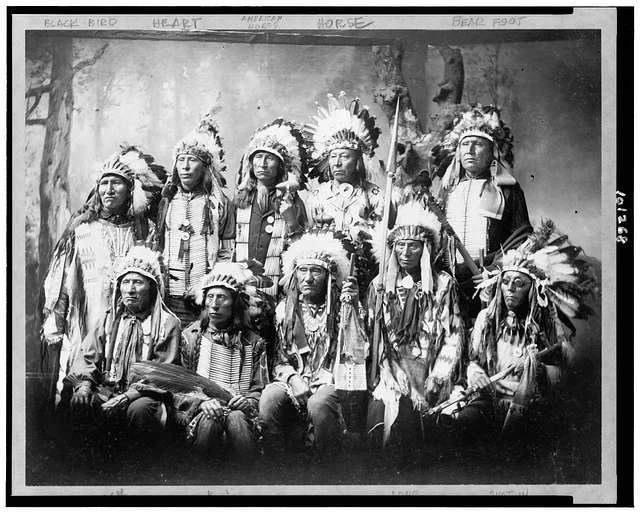
johnbowe.info – Native American history is a profound chronicle of resilience, resistance, and cultural survival. Spanning thousands of years, it is a history marked by profound connections to the land, complex social structures, and rich traditions. However, it is also a history of relentless struggles against colonization, forced displacement, cultural erasure, and systemic oppression. Despite these challenges, Native American communities have continued to persevere, adapting and thriving in the face of adversity. This article delves into the history of Native Americans, exploring their cultural survival and the ongoing efforts to preserve and revitalize their heritage.

The Ancient Roots of Native American Cultures

Before European explorers arrived in the Americas, Native American peoples had developed diverse and complex societies across the continents. These societies ranged from nomadic groups to sedentary civilizations, each with its own unique culture, language, and social structure.

In North America, Native American cultures flourished for thousands of years. Some of the earliest evidence of Native life dates back over 15,000 years, with archaeological sites such as Clovis, located in present-day New Mexico, offering insight into the first peoples to inhabit the continent. These early inhabitants adapted to a wide variety of environments, from the cold tundra of the far north to the temperate forests and vast plains.

Many tribes developed sophisticated farming techniques, including the cultivation of corn, beans, and squash—often referred to as the “Three Sisters”—which formed the foundation of their agricultural systems. Others, like the Great Plains tribes, were masterful hunters, relying on bison for food, clothing, and tools.

By the time European explorers arrived in the 15th and 16th centuries, Native American societies had already built complex political, social, and economic systems. Tribes such as the Iroquois Confederacy, the Cherokee, and the Navajo had established councils, laws, and practices that guided their communities. The Aztec, Inca, and Maya civilizations in Central and South America had constructed vast cities, developed advanced knowledge of astronomy and mathematics, and created impressive art and architecture.

European Colonization and Its Impact

The arrival of Europeans in the Americas brought profound changes to Native American societies. Spanish, English, French, and Dutch explorers and settlers sought to expand their empires and exploit the resources of the continent. This led to the introduction of diseases such as smallpox, influenza, and measles, which devastated Indigenous populations who had no immunity to these foreign pathogens.

In addition to disease, European settlers began encroaching on Native American lands, seeking to establish colonies, extract resources, and spread Christianity. For many tribes, this led to violent conflicts and the loss of their ancestral territories. As settlers moved westward, the displacement of Native peoples became systematic, and the U.S. government began to adopt policies designed to forcibly remove Indigenous populations from their lands.

The Indian Removal Act of 1830 was one of the most notorious examples of these policies, leading to the forced relocation of thousands of Native people from the southeastern United States to reservations in the west. The Trail of Tears, which saw the forced removal of the Cherokee, Choctaw, and other tribes, resulted in the deaths of thousands due to disease, starvation, and exposure.

Despite these horrific events, Native American tribes fought to maintain their way of life. They resisted displacement, sometimes through armed conflict, as in the case of the Lakota Sioux and the Apache, and other times through legal challenges, diplomacy, and negotiation. However, the force of colonization and the expansion of the U.S. frontier had a devastating impact on Native cultures and ways of life.

The Era of Assimilation and Cultural Destruction

Following the violent displacement and relocation of Native Americans, the U.S. government pursued policies aimed at assimilating Indigenous peoples into Western culture. The most infamous of these policies was the establishment of Indian boarding schools in the late 19th and early 20th centuries. These schools were designed to strip Native American children of their languages, traditions, and spiritual practices, forcing them to adopt Western customs and values.

At these schools, children were subjected to harsh discipline, prohibited from speaking their native languages, and punished for practicing their cultural rituals. The intent was to “civilize” Native American children by erasing their cultural identities and integrating them into mainstream American society. This forced assimilation caused lasting trauma, and the impact of these policies is still felt by Native communities today.

Additionally, the U.S. government sought to undermine Native American sovereignty by breaking up tribal lands through the Dawes Act of 1887. This act allotted individual plots of land to Native American families and opened up the remaining land to white settlers. The Dawes Act contributed to the erosion of Native communal land ownership and further weakened tribal governance.

Resistance and Revival: The Struggle for Survival

Despite centuries of adversity, Native Americans have demonstrated extraordinary resilience. Throughout the 19th and 20th centuries, Native communities resisted efforts to assimilate, fought to protect their land, and worked to preserve their cultural identities.

One of the most significant moments of resistance came in the form of the Indian Wars (1860s-1890s), when tribes such as the Lakota Sioux, Nez Perce, Apache, and Cheyenne fought to protect their lands from U.S. encroachment. Leaders like Sitting Bull, Crazy Horse, and Geronimo became symbols of Native resistance. The most famous battle during this period was the Battle of Little Bighorn in 1876, where the Lakota Sioux, led by Sitting Bull and Crazy Horse, defeated General Custer’s 7th Cavalry.

Even after military resistance was crushed, Native Americans continued to fight for their cultural survival. In the early 20th century, Native leaders such as John Collier, the Commissioner of Indian Affairs under President Franklin D. Roosevelt, advocated for a change in U.S. policy. This led to the Indian Reorganization Act of 1934, which sought to restore some autonomy to Native tribes and protect Native cultures from further destruction. The act allowed tribes to form governments, control their lands, and preserve their traditions.

In the 1960s and 1970s, Native American activism gained momentum, particularly with the rise of the American Indian Movement (AIM). AIM organized protests, including the occupation of Alcatraz Island in 1969 and the Wounded Knee Incident in 1973, to draw attention to the ongoing struggles of Native peoples. This period of activism led to the passage of laws that recognized Native American rights, such as the Indian Self-Determination and Education Assistance Act of 1975.

Cultural Revival and Sovereignty in the Modern Era

Today, Native American communities continue to work toward cultural survival and political sovereignty. Many tribes are revitalizing their languages, traditional practices, and ceremonies, working to preserve the richness of their cultures for future generations. Language revitalization efforts, such as immersion schools and language courses, are being undertaken to teach Native American languages to younger generations, some of which were at risk of disappearing altogether.

Native American sovereignty is also a key issue in modern times. Tribes are fighting for greater control over their lands, resources, and governance. The recognition of tribal sovereignty has led to significant gains in areas such as gaming, education, and health care, allowing Native American nations to develop economic opportunities and improve the well-being of their people.

Additionally, Native American art, literature, and music have experienced a renaissance in recent years. Native artists and writers are using their work to reflect on their experiences, challenge stereotypes, and share their perspectives with the world. The contributions of Native Americans to the arts and culture of the United States are increasingly recognized and celebrated.

Conclusion: The Chronicle of Cultural Survival

The history of Native Americans is not merely a history of loss and suffering, though those experiences are undeniably part of their story. It is also a history of remarkable survival, resistance, and cultural revival. Despite centuries of colonization, forced displacement, and cultural erasure, Native American peoples have held onto their identities, languages, and traditions.

Today, Native Americans continue to be a vibrant and essential part of the American social, cultural, and political landscape. The struggles and triumphs of Native communities remind us that the story of Native America is far from over—it is one of perseverance, healing, and the ongoing journey toward justice and recognition.

Native American history is a chronicle of cultural survival, and the strength of Native communities continues to inspire and inform future generations. Their story is a testament to the power of resilience and the importance of cultural preservation in the face of adversity.

The Liberation of L.B. Jones: Race & Class in the American South

johnbowe.info – The Liberation of L.B. Jones (1970) is a controversial and largely forgotten film directed by William Wyler, a renowned filmmaker known for classics like Ben-Hur and The Best Years of Our Lives. This was Wyler’s final film, and it remains a stark and unflinching portrayal of race relations in the American South during the Civil Rights era.   

A Complex and Unlikable Protagonist

The film centers on L.B. Jones, a wealthy Black funeral director played by Roscoe Lee Browne. Jones is a complex and unlikable character, driven by a desire for revenge against his unfaithful wife, Emma, and her white lover, a local police officer. Jones’s pursuit of justice leads him down a dark and morally ambiguous path, highlighting the destructive power of anger and resentment.   

A Satirical Look at Racial Prejudice

While the film is a serious drama, it also contains elements of satire and dark comedy. The portrayal of the white characters, particularly the corrupt and bigoted law enforcement officers, is often exaggerated and grotesque. This satirical approach, however, did not resonate with audiences at the time and contributed to the film’s commercial failure.

A Divisive Legacy

The Liberation of L.B. Jones was a critical and commercial disappointment upon its release. Many critics found the film to be overly cynical and pessimistic, while others praised its bold and unflinching portrayal of racial injustice. The film’s divisive reception, combined with its challenging subject matter, has led to its relative obscurity in the years since its release.   

A Forgotten Gem Worth Rediscovering

Despite its flaws, The Liberation of L.B. Jones remains a fascinating and thought-provoking film. Its unflinching portrayal of racism and its exploration of the complexities of human nature make it a valuable contribution to the American film canon. While it may not be an easy watch, it is a powerful and disturbing reminder of a dark chapter in American history.