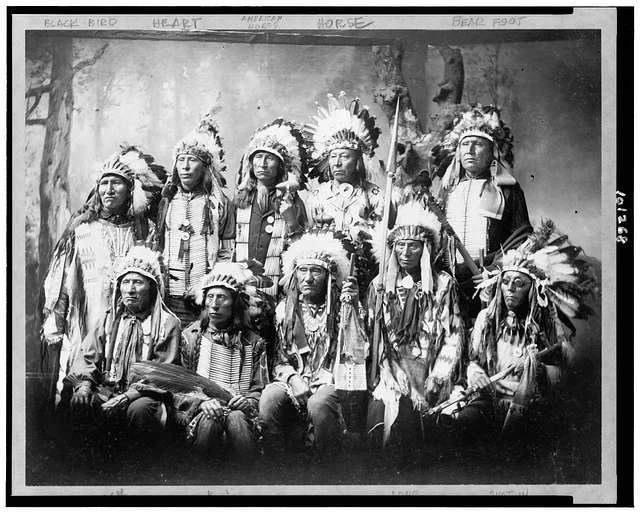
Native American History: A Chronicle of Cultural Survival

johnbowe.info – Native American history is a profound chronicle of resilience, resistance, and cultural survival. Spanning thousands of years, it is a history marked by profound connections to the land, complex social structures, and rich traditions. However, it is also a history of relentless struggles against colonization, forced displacement, cultural erasure, and systemic oppression. Despite these challenges, Native American communities have continued to persevere, adapting and thriving in the face of adversity. This article delves into the history of Native Americans, exploring their cultural survival and the ongoing efforts to preserve and revitalize their heritage.

The Ancient Roots of Native American Cultures

Before European explorers arrived in the Americas, Native American peoples had developed diverse and complex societies across the continents. These societies ranged from nomadic groups to sedentary civilizations, each with its own unique culture, language, and social structure.

In North America, Native American cultures flourished for thousands of years. Some of the earliest evidence of Native life dates back over 15,000 years, with archaeological sites such as Clovis, located in present-day New Mexico, offering insight into the first peoples to inhabit the continent. These early inhabitants adapted to a wide variety of environments, from the cold tundra of the far north to the temperate forests and vast plains.

Many tribes developed sophisticated farming techniques, including the cultivation of corn, beans, and squash—often referred to as the “Three Sisters”—which formed the foundation of their agricultural systems. Others, like the Great Plains tribes, were masterful hunters, relying on bison for food, clothing, and tools.

By the time European explorers arrived in the 15th and 16th centuries, Native American societies had already built complex political, social, and economic systems. Tribes such as the Iroquois Confederacy, the Cherokee, and the Navajo had established councils, laws, and practices that guided their communities. The Aztec, Inca, and Maya civilizations in Central and South America had constructed vast cities, developed advanced knowledge of astronomy and mathematics, and created impressive art and architecture.

European Colonization and Its Impact

The arrival of Europeans in the Americas brought profound changes to Native American societies. Spanish, English, French, and Dutch explorers and settlers sought to expand their empires and exploit the resources of the continent. This led to the introduction of diseases such as smallpox, influenza, and measles, which devastated Indigenous populations who had no immunity to these foreign pathogens.

In addition to disease, European settlers began encroaching on Native American lands, seeking to establish colonies, extract resources, and spread Christianity. For many tribes, this led to violent conflicts and the loss of their ancestral territories. As settlers moved westward, the displacement of Native peoples became systematic, and the U.S. government began to adopt policies designed to forcibly remove Indigenous populations from their lands.

The Indian Removal Act of 1830 was one of the most notorious examples of these policies, leading to the forced relocation of thousands of Native people from the southeastern United States to reservations in the west. The Trail of Tears, which saw the forced removal of the Cherokee, Choctaw, and other tribes, resulted in the deaths of thousands due to disease, starvation, and exposure.

Despite these horrific events, Native American tribes fought to maintain their way of life. They resisted displacement, sometimes through armed conflict, as in the case of the Lakota Sioux and the Apache, and other times through legal challenges, diplomacy, and negotiation. However, the force of colonization and the expansion of the U.S. frontier had a devastating impact on Native cultures and ways of life.

The Era of Assimilation and Cultural Destruction

Following the violent displacement and relocation of Native Americans, the U.S. government pursued policies aimed at assimilating Indigenous peoples into Western culture. The most infamous of these policies was the establishment of Indian boarding schools in the late 19th and early 20th centuries. These schools were designed to strip Native American children of their languages, traditions, and spiritual practices, forcing them to adopt Western customs and values.

At these schools, children were subjected to harsh discipline, prohibited from speaking their native languages, and punished for practicing their cultural rituals. The intent was to “civilize” Native American children by erasing their cultural identities and integrating them into mainstream American society. This forced assimilation caused lasting trauma, and the impact of these policies is still felt by Native communities today.

Additionally, the U.S. government sought to undermine Native American sovereignty by breaking up tribal lands through the Dawes Act of 1887. This act allotted individual plots of land to Native American families and opened up the remaining land to white settlers. The Dawes Act contributed to the erosion of Native communal land ownership and further weakened tribal governance.

Resistance and Revival: The Struggle for Survival

Despite centuries of adversity, Native Americans have demonstrated extraordinary resilience. Throughout the 19th and 20th centuries, Native communities resisted efforts to assimilate, fought to protect their land, and worked to preserve their cultural identities.

One of the most significant moments of resistance came in the form of the Indian Wars (1860s-1890s), when tribes such as the Lakota Sioux, Nez Perce, Apache, and Cheyenne fought to protect their lands from U.S. encroachment. Leaders like Sitting Bull, Crazy Horse, and Geronimo became symbols of Native resistance. The most famous battle during this period was the Battle of Little Bighorn in 1876, where the Lakota Sioux, led by Sitting Bull and Crazy Horse, defeated General Custer’s 7th Cavalry.

Even after military resistance was crushed, Native Americans continued to fight for their cultural survival. In the early 20th century, Native leaders such as John Collier, the Commissioner of Indian Affairs under President Franklin D. Roosevelt, advocated for a change in U.S. policy. This led to the Indian Reorganization Act of 1934, which sought to restore some autonomy to Native tribes and protect Native cultures from further destruction. The act allowed tribes to form governments, control their lands, and preserve their traditions.

In the 1960s and 1970s, Native American activism gained momentum, particularly with the rise of the American Indian Movement (AIM). AIM organized protests, including the occupation of Alcatraz Island in 1969 and the Wounded Knee Incident in 1973, to draw attention to the ongoing struggles of Native peoples. This period of activism led to the passage of laws that recognized Native American rights, such as the Indian Self-Determination and Education Assistance Act of 1975.

Cultural Revival and Sovereignty in the Modern Era

Today, Native American communities continue to work toward cultural survival and political sovereignty. Many tribes are revitalizing their languages, traditional practices, and ceremonies, working to preserve the richness of their cultures for future generations. Language revitalization efforts, such as immersion schools and language courses, are being undertaken to teach Native American languages to younger generations, some of which were at risk of disappearing altogether.

Native American sovereignty is also a key issue in modern times. Tribes are fighting for greater control over their lands, resources, and governance. The recognition of tribal sovereignty has led to significant gains in areas such as gaming, education, and health care, allowing Native American nations to develop economic opportunities and improve the well-being of their people.

Additionally, Native American art, literature, and music have experienced a renaissance in recent years. Native artists and writers are using their work to reflect on their experiences, challenge stereotypes, and share their perspectives with the world. The contributions of Native Americans to the arts and culture of the United States are increasingly recognized and celebrated.

Conclusion: The Chronicle of Cultural Survival

The history of Native Americans is not merely a history of loss and suffering, though those experiences are undeniably part of their story. It is also a history of remarkable survival, resistance, and cultural revival. Despite centuries of colonization, forced displacement, and cultural erasure, Native American peoples have held onto their identities, languages, and traditions.

Today, Native Americans continue to be a vibrant and essential part of the American social, cultural, and political landscape. The struggles and triumphs of Native communities remind us that the story of Native America is far from over—it is one of perseverance, healing, and the ongoing journey toward justice and recognition.

Native American history is a chronicle of cultural survival, and the strength of Native communities continues to inspire and inform future generations. Their story is a testament to the power of resilience and the importance of cultural preservation in the face of adversity.

Rugbrød: The Heart of Danish Cuisine – A Brief History

johnbowe.info – Rugbrød, or rye bread, is a staple food in Danish cuisine. It’s a dense, dark bread with a distinctive flavor and texture that has been enjoyed for centuries.

A Brief History

Rye bread has a long history in Denmark, dating back to the Viking Age. It was a popular food among the Vikings, who often used it as a source of energy during their long sea voyages. Over time, the Danish perfected the art of making rye bread, developing unique recipes and techniques that have been passed down through generations.

The Characteristics of Rugbrød

Rugbrød is characterized by its dense, chewy texture and its distinctive flavor. The bread is typically dark brown in color and has a slightly sour taste, which comes from the fermentation process. It is often made with a mixture of rye flour and wheat flour, and it may also contain seeds such as sunflower seeds, pumpkin seeds, or flax seeds.

The Many Uses of Rugbrød

Rugbrød is a versatile bread that can be enjoyed in many different ways. It is often eaten with butter and cheese, or it can be used to make sandwiches. It is also a popular ingredient in Danish open-faced sandwiches, known as smørrebrød.

A Healthy Choice

Rugbrød is not only delicious but also nutritious. It is a good source of fiber, vitamins, and minerals. It is also low in fat and calories, making it a healthy choice for people who are looking to maintain a healthy diet.

A Culinary Tradition

Rugbrød is an essential part of Danish culinary tradition. It is often served with traditional Danish dishes, such as stegt flæsk med persillesovs (fried pork belly with parsley sauce) or leverpostej (liver pâté). It is also a popular choice for breakfast, lunch, and dinner.

Brezel: A German Baking Tradition – A Brief History

johnbowe.info – Brezel, or pretzels, are a beloved German baked good with a long and storied history. These iconic twisted knots of dough, often sprinkled with salt, have become a symbol of German culture and cuisine.

A Brief History

The exact origins of the Brezel are shrouded in mystery, but it is believed that they were first created by monks in European monasteries during the 6th or 7th century. The twisted shape of the Brezel is said to symbolize prayer, with the three prongs representing the Holy Trinity.

The Art of Making Brezel

Creating the perfect Brezel requires a few key techniques:

  1. Preparing the Dough: A simple dough made from flour, water, yeast, and salt is kneaded until smooth and elastic.
  2. Shaping the Brezel: The dough is shaped into the characteristic twisted knot. This can be done by hand or with a special Brezel shaping tool.
  3. Boiling the Brezel: The shaped Brezel are briefly boiled in a lye solution, which gives them their distinctive flavor and shiny crust.
  4. Baking the Brezel: The boiled Brezel are baked in a hot oven until golden brown.

Serving Suggestions

Brezel are typically enjoyed fresh, often accompanied by a variety of dips and spreads:

  • Butter: A classic and simple pairing.
  • Cheese: A variety of cheeses, such as cheddar or Gouda, can be enjoyed with Brezel.
  • Obatzda: A Bavarian cheese spread made with Camembert, butter, and spices.
  • Leberkäse: A type of meatloaf that is often served with Brezel.

Modern Variations

In recent years, bakers have experimented with different flavors and ingredients to create innovative Brezel:

  • Sweet Brezel: Topped with sugar, cinnamon, and nuts.
  • Herbed Brezel: Flavored with herbs like rosemary or thyme.
  • Chocolate Brezel: Dipped in chocolate or filled with chocolate.

Kochi: A Maritime City with a Rich History

johnbowe.info – Kochi, formerly known as Cochin, is a vibrant coastal city in the Indian state of Kerala. With its rich history, diverse culture, and stunning backwaters, Kochi offers a unique blend of old-world charm and modern amenities.

A Glimpse into the Past

Kochi’s history dates back to ancient times, with evidence of human settlement dating back to the 8th century BC. The city’s strategic location on the Malabar Coast made it a major trading port for centuries. The Portuguese, Dutch, and British colonizers left their mark on the city, influencing its architecture, cuisine, and culture.

  • Fort Kochi: This historic neighborhood is a popular tourist destination, with its colonial-era buildings, Chinese fishing nets, and beautiful beaches.
  • Mattancherry Palace: This 16th-century palace, also known as the Dutch Palace, houses a collection of murals depicting Hindu mythological stories.
  • Jewish Synagogue: This ancient synagogue, built in the 16th century, is one of the oldest active synagogues in India.

A Cultural Melting Pot

Kochi is a melting pot of cultures, with people from different religions and ethnicities living in harmony. The city’s festivals, such as Onam and Christmas, are celebrated with great enthusiasm. Kathakali, a classical dance form, and Mohiniyattam, a graceful dance form, are popular cultural performances in Kochi.

A Backwater Paradise

Kochi is the gateway to Kerala’s beautiful backwaters. The serene backwaters, a network of interconnected canals, lakes, and lagoons, offer a tranquil escape from the hustle and bustle of city life. Houseboat cruises on the backwaters are a popular tourist activity.

A Culinary Delight

Kochi’s cuisine is a delightful blend of flavors, influenced by Kerala’s coastal and inland regions. Seafood, especially fish and prawns, is a staple in Kochi’s cuisine. Appam, a type of pancake, and fish curry are popular local dishes.

The Future of Kochi

Kochi is a city that is constantly evolving. With its focus on tourism, IT, and healthcare, Kochi is poised to become one of the leading cities in India. The city’s rich history, diverse culture, and stunning natural beauty make it a truly unique destination.

Whether you’re exploring its historical sites, relaxing on its beautiful beaches, or cruising through its serene backwaters, Kochi offers a memorable experience.

From Colonialism to Independence: The History of Kiribati

johnbowe.info – Kiribati, an island nation in the central Pacific Ocean, has a rich history marked by periods of colonization and a significant journey towards self-determination. This article explores the historical trajectory of Kiribati, from its early inhabitants to its status as an independent nation within the Commonwealth of Nations.

Early Inhabitants and European Contact

Kiribati’s history dates back to the prehistoric period when the islands were inhabited by people of the Malayo-Polynesian language group. These early settlers arrived around 3000 years ago, establishing communities and cultures that would later evolve into the unique Kiribati identity.

European contact with Kiribati began in the 16th century, with the first recorded sighting by Spanish explorers in 1526. However, it was not until the late 19th century that significant European influence began to shape the islands’ future.

Colonial Rule

In 1892, the Gilbert Islands and parts of the Ellice Islands were declared a British protectorate. This marked the beginning of British colonial rule, which would last for nearly a century. The British administration focused on exploiting the islands’ resources, particularly phosphate mining, which became a significant economic activity until its decline in the 1980s.

In 1916, the Ellice Islands were formally incorporated into the British colony, which was then known as the British Gilbert and Ellice Islands Colony. This period was marked by administrative challenges and tensions, particularly between the Gilbert and Ellice Islands, which had distinct cultural and linguistic differences.

Path to Independence

The mid-20th century saw a shift towards self-determination as part of the global decolonization movement. The United Nations Special Committee on Decolonization played a crucial role in initiating the process of decolonization in the Pacific region.

In 1974, a referendum was held in the Ellice Islands, leading to their separation from the Gilbert Islands. This was followed by the establishment of the independent nation of Tuvalu in 1975. The Gilbert Islands, now known as Kiribati, continued on its path towards independence.

Independence and Beyond

Kiribati achieved full independence on July 12, 1979, under the name of the Republic of Kiribati. This was a significant milestone, marking the end of British colonial rule and the beginning of a new era of self-governance.

The first constitution of Kiribati came into effect on the same day, establishing a parliamentary system with a president as the head of state and government. Since independence, Kiribati has focused on economic development, particularly in the areas of fishing and tourism, while also addressing the challenges of climate change and environmental sustainability.

Conclusion

The history of Kiribati is a testament to the resilience and determination of its people. From its early inhabitants to its status as an independent nation, Kiribati’s journey is marked by periods of colonization, struggle, and eventual self-determination. Today, Kiribati continues to navigate the complexities of modern international relations while preserving its unique cultural heritage and identity.

Kiribati’s story is a reminder of the importance of sovereignty and the enduring human spirit in the face of adversity. As the nation looks to the future, it does so with a deep sense of pride in its past and a commitment to shaping a prosperous and sustainable future for its people.

The History of Kosovo from the Medieval Era to the Present

johnbowe.info – Kosovo’s history is a tapestry of cultural, political, and social evolution, reflecting the broader dynamics of the Balkan region. This article explores the historical trajectory of Kosovo from the medieval era to the present day, highlighting key periods and events that have shaped its identity.

Medieval Era

The medieval period in Kosovo was marked by its integration into various empires and kingdoms. Initially, Kosovo was part of the Roman Empire and later became a significant region for the early Slavic peoples. The region saw the construction of many important Serb religious sites, which became a centerpiece of Serbian cultural heritage during the medieval period.

The most notable event of this era was the Battle of Kosovo in 1389, where the Serbian forces were defeated by the Ottoman Empire. This battle had profound implications for the region, leading to centuries of Ottoman rule.

Ottoman Rule

From the mid-15th century until the early 20th century, Kosovo was under Ottoman rule. This period was characterized by the spread of Islam and the establishment of a distinct Ottoman administrative structure. The Ottoman era also saw significant demographic changes, with a notable increase in the Muslim population.

Modern Era

The 20th century brought significant changes to Kosovo’s status and governance. After World War I, Kosovo became part of the Kingdom of Serbs, Croats, and Slovenes, which later became Yugoslavia. The period was marked by tensions between the ethnic Albanian and Serbian populations, leading to various conflicts and uprisings.

The late 20th century witnessed the disintegration of Yugoslavia, and Kosovo declared its independence from Serbia in 2008. This move was recognized by many countries but remains controversial, with Serbia and some other states not acknowledging Kosovo’s sovereignty.

Conclusion

Kosovo’s history is a complex narrative of cultural integration, conflict, and resilience. From its medieval status as a center of Serbian culture to its modern identity as an independent state, Kosovo’s journey reflects the broader historical dynamics of the Balkans. Understanding this history is crucial for appreciating the current challenges and aspirations of the people of Kosovo.

This brief overview highlights the key milestones in Kosovo’s history, providing a foundation for further exploration and analysis of this fascinating region.

A History of Unity and Diversity: The Swiss Confederation

johnbowe.info – The Swiss Confederation, with its roots dating back to the late Middle Ages, stands as a testament to the enduring power of unity amidst diversity. This article explores the historical journey of Switzerland, from its formation as a defensive alliance among three cantons to its current status as a federal state, highlighting the delicate balance between unity and diversity that has characterized its development.

The Founding of the Confederation

The story of the Swiss Confederation begins in 1291, with the signing of the Federal Charter by the cantons of Uri, Schwyz, and Unterwalden. This pact, motivated by a shared desire for independence from the Habsburg dynasty, laid the foundation for a unique political entity that would expand over the centuries.

Expansion and Confederate Structure

As the Confederation grew, it maintained a decentralized structure, with each canton retaining a significant degree of autonomy. This federal model allowed for the integration of various regions with distinct languages, cultures, and religions, setting the stage for Switzerland’s reputation as a multicultural nation.

The Impact of the Reformation

The Protestant Reformation of the 16th century introduced a new dimension of diversity within the Confederation, with some cantons adopting the new faith while others remained Catholic. This religious divide tested the Confederation’s unity but ultimately contributed to the development of a pluralistic society that valued tolerance and coexistence.

The Long Path to Federalism

The 19th century was a pivotal period for the Swiss Confederation, marked by the establishment of a federal constitution in 1848. This transformation from a loose confederation to a federal state was the result of a civil war, known as the Sonderbund War, which resolved the tensions between the liberal and conservative cantons.

Modern Switzerland: Unity in Diversity

Today, Switzerland is celebrated for its harmonious blend of cultural, linguistic, and religious diversity. The federal structure ensures that while the country operates as a cohesive unit, each canton maintains its unique identity and traditions. This delicate balance is a key factor in Switzerland’s stability and prosperity.

Conclusion: Lessons from the Swiss Model

The history of the Swiss Confederation offers valuable insights into the management of unity and diversity. By embracing federalism and respecting the autonomy of its constituent parts, Switzerland has created a model of governance that promotes both national cohesion and the preservation of local identities. As the world becomes increasingly interconnected, the Swiss experience serves as a beacon of hope for societies seeking to navigate the complexities of diversity.